Polynucleotides have become one of the most discussed treatments in aesthetic medicine. They are often described as regenerative injectables that can improve skin quality, hydration, elasticity and texture without adding the same volume as a traditional dermal filler.
But with so much attention around them, it is reasonable to ask: what is a polynucleotides treatment, and why isn’t it available in every skin clinic?
The straightforward answer is that polynucleotides are promising, but they are still an emerging treatment. The evidence is growing, treatment protocols are not yet fully standardised, and not every clinic has the experience, products or medical expertise needed to offer them safely.
Here is what you need to know before considering polynucleotides injections.
What Is a Polynucleotides Treatment?
Polynucleotides are purified DNA fragments used in aesthetic medicine to support the skin’s natural repair and regeneration processes.
They are usually derived from highly purified salmon or trout DNA. Once processed, the fragments are designed for use in medical and aesthetic treatments. They do not work like a traditional filler by simply adding volume beneath the skin.
Instead, polynucleotides are intended to create a supportive environment for skin repair. They may help improve hydration, encourage fibroblast activity and support the production of collagen and elastin.
The key point is that polynucleotides are designed to improve skin quality, rather than dramatically change facial shape.
How Do Polynucleotides Work?
Polynucleotides are thought to work through several processes:
- Supporting tissue repair: They may help create an environment that supports the skin’s natural healing response.
- Improving hydration: Their water-attracting properties may help the skin retain moisture.
- Supporting fibroblast activity: Fibroblasts are cells involved in the production of collagen and other components of the skin.
- Encouraging skin remodelling: Over time, they may support improvements in elasticity, texture and firmness.
- Helping calm inflammation: Some research suggests that polynucleotides may have anti-inflammatory properties.
However, it is important not to confuse a proposed mechanism with a guaranteed clinical result. Research is still developing, and results can vary depending on the product, injection technique, treatment area and individual skin condition.
What Can Polynucleotides Injections Treat?
Polynucleotides injections are generally considered for concerns related to skin quality rather than significant volume loss.
They may be used to improve:
- Fine lines and early wrinkles
- Dehydrated or crepey skin
- Uneven skin texture
- Reduced elasticity
- Dull-looking skin
- Certain types of acne scarring
- The appearance of delicate under-eye skin
- Mild skin laxity
- Skin that appears tired or less resilient
They are not designed to replace every other aesthetic treatment. For example, they may not be the right option for someone who needs significant lifting, structural support or correction of deep facial volume loss.
Why Are Polynucleotides Often Called a Regenerative Treatment?
Traditional aesthetic treatments often focus on relaxing muscles, adding volume, resurfacing the skin or tightening tissue.
Polynucleotides are different because they aim to support the skin’s own repair and remodelling processes.
This is why they are often described as a regenerative or restorative treatment. The goal is not necessarily to create an immediate, dramatic change. Instead, the aim is to gradually improve how the skin looks and feels.
This can make them appealing to people who want:
- A more natural-looking improvement
- Better skin texture rather than added volume
- Improved hydration and elasticity
- A treatment that complements their existing skincare routine
- A gradual approach to facial rejuvenation
That said, “regenerative” does not mean that the treatment can reverse ageing or rebuild every damaged structure in the skin.
Why Aren’t Polynucleotides Available in Every Skin Clinic?
There are several reasons why polynucleotides are not offered by every clinic.
1. The Evidence Is Still Developing
Polynucleotides have shown promising results in studies involving skin rejuvenation, wrinkles, elasticity, texture and scarring. However, much of the research is based on small studies, different products and varying treatment protocols.
A 2025 systematic review found promising improvements in wrinkles, skin texture and elasticity, but also noted that the available studies were generally of low or moderate quality. The review highlighted the need for larger, better-designed research before firm conclusions can be made.
More recent research continues to show potential, including studies looking at under-eye rejuvenation and enlarged pores. However, these findings still need to be confirmed through larger controlled trials.
A responsible clinic should therefore explain both the potential benefits and the limitations of the evidence. Our guide to whether polynucleotides work looks at what the research does and does not show in more detail.
2. Products and Protocols Are Not All the Same
“Polynucleotides” is a broad term. Different products may vary in:
- DNA fragment size
- Concentration
- Source material
- Formulation
- Injection depth
- Recommended treatment area
- Number of sessions
- Treatment intervals
This means that results from one product cannot automatically be applied to every other polynucleotide treatment.
The technique used also matters. Polynucleotides may be administered through multiple small intradermal injections or other delivery approaches, depending on the product and treatment area.
There is currently no single universal protocol that is suitable for every patient.
3. They Require Medical Assessment
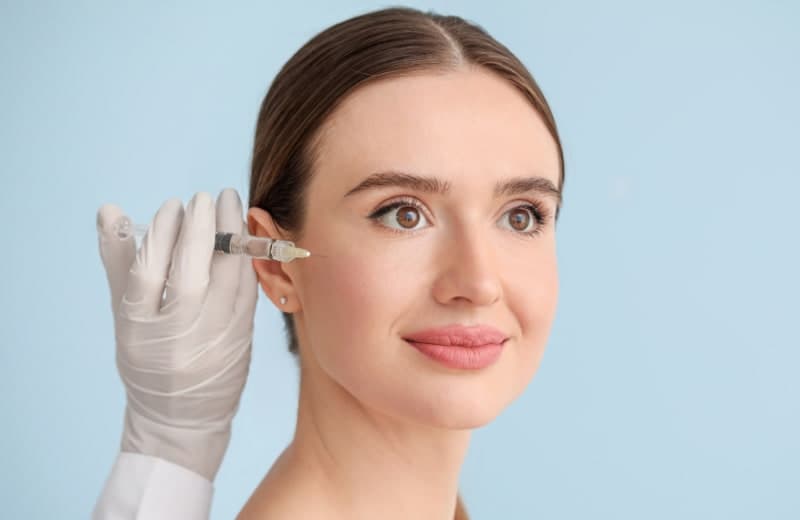
Polynucleotides injections are not simply a facial or skincare procedure. They involve injecting a medical product into the skin.
A proper consultation should consider:
- Your skin type and condition
- Your main concern
- Previous aesthetic treatments
- Allergies and sensitivities
- Active skin conditions
- Your medical history
- Whether the product is suitable for the treatment area
- Whether another treatment may be more appropriate
This is particularly important around delicate areas such as the under-eyes, where the skin is thin and the anatomy is complex.
4. Not Every Clinic Has the Right Experience
A clinic may offer popular injectable treatments without necessarily having experience with newer regenerative products.
Polynucleotides require an understanding of:
- Facial anatomy
- Injection depth
- Product handling
- Appropriate treatment planning
- Managing swelling and bruising
- Recognising complications
- Knowing when not to treat
The product itself is only one part of the treatment. The injector’s medical knowledge and technique are equally important.
5. The Results Are Subtle and Gradual
Polynucleotides are not usually associated with an instant transformation.
Some patients may notice improvements in hydration or skin texture relatively early, but more meaningful changes in elasticity and overall skin quality may take several weeks or months.
This can make the treatment less suitable for people expecting:
- Immediate lifting
- Dramatic wrinkle reduction
- Significant facial reshaping
- Instant correction of deep folds
- A result similar to a surgical facelift
A clinic that promises dramatic results from a few injections should be approached carefully.
Polynucleotides vs Dermal Fillers
Although both treatments involve injections, they have different purposes.
| Feature | Polynucleotides | Dermal fillers |
| Main purpose | Improve skin quality | Restore volume and provide structure |
| Typical result | Gradual improvement in hydration, texture and elasticity | More immediate improvement in volume and contour |
| Adds significant volume? | No, not usually | Yes, depending on the product |
| Common concerns | Fine lines, crepey skin, dehydration and texture | Hollowing, facial volume loss and deeper folds |
| Treatment approach | Supports skin repair and remodelling | Adds a gel-like substance beneath the skin |
| Results | Usually subtle and progressive | Often more visible immediately |
| Suitable for everyone? | No | No |
The treatments may sometimes be used as part of a wider plan, but they are not interchangeable. If your concern is hollowing or lost facial volume, dermal fillers address something polynucleotides are not designed to do.
Are Polynucleotides the Same as PDRN?
The terms polynucleotides and PDRN, or polydeoxyribonucleotides, are sometimes used interchangeably in aesthetic marketing.
However, they can refer to DNA-derived materials with different molecular characteristics. Their properties, formulations and clinical uses may vary.
This is one reason it is important to ask exactly which product is being recommended rather than choosing a treatment based only on the general name.
A medical practitioner should be able to explain:
- The exact product being used
- Where it is sourced from
- Its intended use
- Why it is suitable for you
- How it will be administered
- What evidence supports its use
What Are the Benefits of Polynucleotides?
Potential benefits may include:
Improved Skin Hydration
Polynucleotides may help the skin retain moisture, making it appear smoother and more supple.
Better Skin Texture
They may improve the appearance of rough or uneven skin, particularly when the concern is related to reduced skin quality.
Support for Fine Lines
Polynucleotides may soften the appearance of fine lines over time, especially lines associated with dehydration or crepey skin.
Improved Elasticity
Some studies have reported improvements in skin elasticity, although the extent of the result varies.
Support for Delicate Skin
They are often considered for areas where the skin is thin or fragile, including the under-eye area. However, this requires careful assessment and an experienced injector.
Gradual, Natural-Looking Results
Because the treatment is focused on skin quality rather than adding volume, the result is generally intended to look subtle and natural.
What Are the Limitations?
Polynucleotides are not a universal solution for every skin concern.
They may not be suitable if your main concern is:
- Significant facial volume loss
- Deep static wrinkles
- Pronounced skin laxity
- Heavy jowling
- Severe pigmentation
- Active acne
- An untreated skin condition
- A concern that requires surgery or a different type of treatment
They also cannot guarantee collagen production, prevent future ageing or replace a consistent skincare routine.
The most realistic way to think about them is as one possible tool for improving skin quality, not as a complete solution to facial ageing.
Are Polynucleotides Injections Safe?
When used appropriately, polynucleotides have generally been associated with mild and temporary side effects in published studies.
These may include:
- Redness
- Swelling
- Tenderness
- Small raised injection points
- Bruising
- Itching
- Temporary irritation
These effects usually settle over several days, although recovery can vary depending on the treatment area and individual response. Our guide to polynucleotide injection side effects covers what to expect in more detail.
More importantly, the long-term safety data is still limited. A 2026 consensus statement on emerging dermatology treatments highlighted the lack of standardised protocols, small study sizes and limited long-term evidence surrounding polynucleotides and related DNA-based products.
This does not mean that the treatment is automatically unsafe. It means that it should be approached as an emerging medical treatment rather than a routine beauty procedure.
Who May Not Be Suitable for Polynucleotides?
Polynucleotides may not be appropriate for everyone.
Your clinician may advise against treatment if you have:
- An active infection or inflammation in the treatment area
- Certain skin conditions that are not controlled
- A known allergy to an ingredient in the product
- A history of problematic reactions to injectable treatments
- An unsuitable medical history
- Unrealistic expectations about the results
If you are pregnant or breastfeeding, it is important to discuss this with your clinician before considering any injectable aesthetic treatment.
How Many Polynucleotides Treatments Are Needed?
The number of sessions depends on:
- The product used
- The treatment area
- Your skin condition
- The degree of improvement required
- Your response to previous sessions
Many treatment plans involve a course of sessions rather than one appointment. Results are usually assessed over time, and maintenance treatments may be recommended depending on the individual.
There is no single schedule that is correct for everyone. A clinic should avoid promising that one specific number of injections will produce the same result in every patient.
What Can You Expect After Treatment?
Immediately after polynucleotides injections, you may notice small bumps at the injection points. These are usually temporary and settle as the product disperses.
You may also experience:
- Mild swelling
- Redness
- Tenderness
- Bruising
- A feeling of tightness
Your clinician will provide aftercare advice, which may include avoiding strenuous exercise, excessive heat and unnecessary touching of the treated area for a short period.
The visible improvement is generally gradual. It is better to assess the result after the recommended review period rather than judging it immediately after treatment.
Why Choosing the Right Clinic Matters
Because polynucleotides are still an emerging treatment, the clinic you choose is particularly important.
Look for a clinic that:
- Offers a proper medical consultation
- Explains the evidence honestly
- Uses an identifiable, appropriate product
- Can explain why the treatment is suitable for you
- Has experience with facial injectable treatments
- Discusses risks and alternatives
- Does not promise unrealistic results
- Provides clear aftercare and follow-up
The right question is not simply, “Does this clinic offer polynucleotides?”
It is: “Does this clinic understand when polynucleotides are appropriate, when they are not, and how to use them safely?”
Book a Consultation at Perfect Skin Studio
At Perfect Skin Studio, treatment should begin with understanding your skin rather than choosing a procedure based on a trend.
Polynucleotides may be suitable for patients looking to improve skin quality, hydration, texture and elasticity. However, they are not the right treatment for every concern.
During a consultation, your skin, goals and medical history can be assessed before deciding whether polynucleotides, another injectable treatment, a device-based treatment or a tailored skincare plan would be more appropriate.
The aim is to recommend a treatment that makes sense for your skin, with realistic expectations and a clear understanding of the potential benefits and limitations. Contact Perfect Skin Studio to arrange a consultation.
Frequently asked questions
Still unsure? Our team is glad to talk you through anything before you book.
- A polynucleotides treatment involves injecting purified DNA fragments into the skin to support hydration, skin repair and tissue remodelling. It is generally used to improve skin quality rather than add significant facial volume.
- Polynucleotides injections may be used for fine lines, crepey skin, dehydration, uneven texture, reduced elasticity and certain types of scarring. Suitability depends on the individual and the product being used.
- No. Dermal fillers are mainly used to restore volume and provide structure. Polynucleotides are intended to improve skin quality and support the skin's natural repair processes.
- Results are usually gradual. Some improvements in hydration may be noticed earlier, while changes in texture and elasticity may take several weeks or months.
- Discomfort varies depending on the treatment area, injection technique and individual sensitivity. Your clinician may use a topical anaesthetic or another method to make the procedure more comfortable.
- The duration of results varies according to the product, treatment area, skin condition and maintenance plan. Your clinician can explain what may be realistic for your particular treatment.
- Published studies generally report mild and temporary side effects, but long-term safety data and treatment protocols are still developing. Treatment should be carried out by an appropriately qualified medical professional.
- No. Polynucleotides, wrinkle-relaxing injections and dermal fillers work in different ways. The most suitable treatment depends on whether your concern is related to muscle movement, volume loss or skin quality.
- They are still an emerging treatment, and not every clinic has access to suitable products, experience with the technique or the medical expertise required to assess patients and manage potential complications.
- That depends on your skin concerns, medical history and expectations. A consultation is the best way to establish whether polynucleotides are suitable or whether another treatment would provide a more appropriate result.