
The temples are an important part of the upper face, helping to create a smooth transition between the forehead, eyes and cheeks. When this area becomes less full, it can change the overall shape of the face and make the eyes or cheekbones appear more prominent.
For some people, hollow temples are a natural feature. For others, the change may become more noticeable with age, weight loss or changes in facial volume.
Although hollowing is usually a cosmetic concern, it is important to understand what may be causing it before considering treatment. Depending on the underlying cause, options such as skincare, lifestyle changes or temple filler may be discussed.
What Are Hollow Temples?
Hollow temples refer to a loss of fullness in the areas on either side of the forehead, between the outer corners of the eyes and the hairline.
The temples naturally contain a combination of:
- Skin
- Fat
- Muscle
- Connective tissue
- Bone
The amount and distribution of these tissues vary between individuals. Some people naturally have more defined or hollow-looking temples, while others have a fuller contour.
Hollowing may create:
- A sunken appearance at the sides of the forehead
- More prominent cheekbones
- A sharper transition between the forehead and cheeks
- A tired or aged appearance
- A narrower-looking upper face
- Unevenness between the two temples
The appearance may be more noticeable in certain lighting or after changes in weight.
Why Do My Temples Look Hollow or Sunken?
There are several possible causes of hollow temples. Some are related to natural facial structure, while others develop gradually over time.
| Possible cause | How it may affect the temples | What you may notice |
| Natural facial anatomy | Some people naturally have less volume in the temple area | Hollowing that has always been present |
| Ageing | Changes in fat, skin and supporting tissues can reduce fullness | Gradual temple hollowing over time |
| Weight loss | A reduction in facial fat may affect the temples | Hollowing after losing weight |
| Genetics | Facial structure and fat distribution may be inherited | Similar temple shape among family members |
| Changes in facial volume | Natural fluctuations in soft tissue can alter the contour | Uneven or changing fullness |
| Muscle or tissue changes | Changes in the temporalis muscle or surrounding tissues may affect shape | A more pronounced depression at the temples |
| Previous treatment | Certain cosmetic procedures may alter the balance of facial volume | Hollowing following another treatment |
Common Causes of Hollow Temples
1. Natural Facial Structure
Some people have naturally hollow temples because of their bone structure and the way fat is distributed across the face.
This may be more noticeable in people with:
- A naturally slim face
- Prominent cheekbones
- A narrow upper face
- Less soft tissue around the temples
- A naturally defined forehead and brow area
Natural hollowing is not necessarily a sign of ageing or poor health. It may simply be part of the individual’s facial anatomy.
2. Age-Related Volume Loss
As we age, changes occur in the skin, fat compartments, muscles and supporting tissues of the face.
The temples may lose volume because of:
- Reduction in facial fat
- Changes in fat distribution
- Thinning of the skin
- Changes in the temporalis muscle
- Reduced skin elasticity
- Changes in the underlying support structures
These changes can make the temples appear more sunken and may alter the balance between the forehead, eyes and cheeks.
3. Weight Loss
Significant or rapid weight loss can reduce fat throughout the body, including the face.
Some people notice hollowing in the temples after:
- Losing a substantial amount of weight
- Following a major lifestyle change
- Recovering from an illness
- Experiencing changes in appetite
- Undergoing weight-loss treatment
The amount of change depends on how much weight is lost, the speed of weight loss and the individual’s natural fat distribution.
4. Genetics
Genetics can influence the shape of the forehead, cheekbones and temples.
If hollow temples run in your family, you may have a similar appearance even at a younger age. In these cases, the hollowing may remain relatively stable rather than developing gradually.
5. Changes in Facial Fat
Facial fat is not distributed evenly, and different areas can change at different rates.
A person may retain volume in the cheeks while losing fullness in the temples. This can make the temples appear more hollow in comparison with the rest of the face.
Changes in facial fat may also occur with ageing, weight fluctuations and hormonal changes.
Are Hollow Temples a Sign of Ageing?
Hollow temples can be one of the visible changes associated with ageing, but they are not always caused by age.
Some people naturally have hollow temples from a young age. Others may notice a gradual change as facial volume decreases.
Age-related temple hollowing may occur alongside:
- Hollowing beneath the eyes
- Changes in cheek volume
- More visible facial shadows
- Skin laxity
- A change in the brow contour
- A more angular appearance of the upper face
A consultation can help determine whether the hollowing is mainly related to natural anatomy, volume loss or another factor.
Can Hollow Temples Make You Look Older?
Hollow temples may contribute to an older or more tired-looking appearance in some people because they change the balance of the upper face.
When the temples lose volume, the forehead may appear more prominent and the transition between the forehead and cheeks may become sharper.
However, hollow temples are not necessarily unattractive or abnormal. Facial ageing and facial beauty vary considerably, and treatment should only be considered if the individual is concerned about the appearance.
Can Hollow Temples Affect the Appearance of the Eyes?
The temples sit close to the outer corners of the eyes and the brow area. Changes in volume may therefore affect how these features appear in relation to one another.
Hollowing may make:
- The outer eye area look more prominent
- The brow appear more defined
- The upper face look narrower
- Shadows around the eyes more noticeable
- The transition between the forehead and cheek look less smooth
Temple filler may sometimes improve the overall contour, but it will not treat every type of under-eye hollow or dark circle.
What Is Temple Filler?
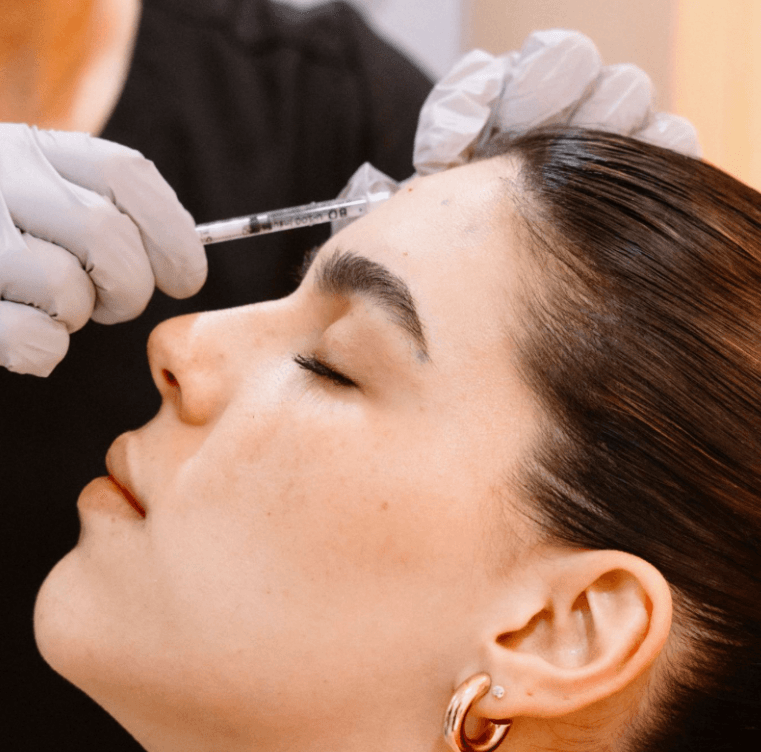
Temple filler is a non-surgical treatment that uses dermal filler to restore volume to hollow areas at the sides of the forehead.
The filler is often made from hyaluronic acid, although the choice of product depends on the practitioner’s assessment and the treatment plan.
The aim may be to:
- Restore volume to hollow temples
- Soften a sunken appearance
- Improve the transition between the forehead and cheeks
- Create a more balanced upper-face contour
- Reduce certain shadows
- Improve facial harmony
The temple filler treatment should be carefully tailored to the individual. The goal is not to make the temples excessively full, but to restore a natural-looking contour where appropriate.
How Does Temple Filler Work?
During treatment, the practitioner places a carefully selected amount of filler into the temple area.
The product adds volume beneath the skin and may help soften the appearance of hollowing. The exact placement depends on the patient’s anatomy, the depth of the hollow and the desired result.
The treatment may be performed using a needle or cannula, depending on the practitioner’s technique and assessment.
Because the temples contain important blood vessels and structures connected to the eye, this is considered a technically demanding area. Treatment should only be carried out by a suitably qualified and experienced medical practitioner.
What Are the Benefits of Temple Filler?
1. Restores Lost Volume
Temple filler may replace some of the volume lost through ageing, weight loss or natural changes in facial structure.
2. Softens a Sunken Appearance
By restoring fullness, treatment may reduce the appearance of deep hollows and shadows at the sides of the forehead.
3. Improves Upper-Face Balance
The temples form part of the upper third of the face. Restoring volume may create a smoother transition between the forehead, eyes and cheeks.
4. Can Improve Facial Symmetry
If one temple is more hollow than the other, carefully placed filler may help improve balance. However, complete symmetry cannot always be achieved.
5. Provides a Non-Surgical Option
Temple filler does not involve an incision or surgical removal of tissue. However, it is still a medical treatment with potential risks and should not be considered risk-free.
Can Temple Filler Treat Forehead Hollowing?
Temple filler may improve hollowing at the sides of the forehead, but it does not treat every type of forehead contour concern.
The forehead and temples are connected areas, but they have different anatomy and treatment considerations. Forehead filler is assessed and planned separately.
If the main concern is:
- A flat forehead
- A central forehead indentation
- A prominent forehead
- A change in brow position
- Excess skin
- Expression lines
Another treatment may be more appropriate.
A detailed assessment can help determine whether the concern is related to the temples, forehead or a combination of areas.
What Are the Risks of Temple Filler?
Temple filler carries risks, including common temporary side effects and rare but serious complications.
Possible side effects include:
- Bruising
- Swelling
- Redness
- Tenderness
- Temporary asymmetry
- Lumps or irregularities
- Infection
- Persistent swelling
- Skin discolouration
- Vascular complications
The temples contain blood vessels that may connect with the vessels supplying the eyes. If filler enters a blood vessel, it can potentially affect blood flow to the skin or eye.
Rare complications may include:
- Skin damage
- Visual disturbance
- Loss of vision
- Tissue injury
- Pulmonary embolism
This is why temple filler should only be considered after a careful assessment and performed by an experienced medical practitioner who understands the anatomy and can recognise and manage complications.
Who May Be Suitable for Temple Filler?
Temple filler may be considered for adults who have:
- Mild to moderate temple hollowing
- Volume loss related to ageing or weight loss
- A suitable facial structure
- Realistic expectations
- Good general health
- A clear understanding of the potential risks
It may not be suitable for people with:
- Active skin infection
- Unexplained swelling or lumps
- Certain medical conditions
- Previous serious filler complications
- Significant facial asymmetry requiring another form of treatment
- Unrealistic expectations
Previous filler treatment should always be discussed during the consultation, particularly if the temples or surrounding areas have been treated before.
What Happens During a Temple Filler Consultation?
A consultation should begin with an assessment of the underlying cause of the hollowing.
Your practitioner may examine:
- The depth and shape of the temple hollow
- The forehead and brow contour
- The cheekbones
- The amount and distribution of facial volume
- Skin quality
- Facial symmetry
- Previous cosmetic treatments
- Any signs of swelling or inflammation
They may also assess whether the hollowing is caused by natural anatomy, ageing, weight loss or another factor.
The practitioner should explain:
- Whether temple filler is suitable
- What improvement may realistically be achieved
- The potential risks
- The expected recovery period
- Whether forehead or cheek treatment may also be relevant
- Whether another treatment may be more appropriate
What Is Recovery Like After Temple Filler?
Recovery varies depending on the product, amount injected and technique used.
You may experience:
- Mild swelling
- Bruising
- Redness
- Tenderness
- A feeling of fullness
- Temporary unevenness
The temples may appear slightly fuller immediately after treatment because of swelling. This does not necessarily represent the final result.
Your practitioner will provide aftercare advice and explain when the area should be reviewed.
Seek urgent medical advice if you experience severe pain, unusual skin discolouration, significant swelling or any visual symptoms after treatment.
How Long Does Temple Filler Last?
Temple filler is temporary, although the duration of the result varies.
Factors that may affect longevity include:
- The type of filler used
- The amount injected
- Your individual metabolism
- The degree of volume loss
- Lifestyle factors
- Whether the area has been treated previously
Some patients may notice the result for many months, while others may experience a shorter or longer duration.
Further treatment should only be considered after the area has settled and the result has been assessed.
Can Temple Filler Be Reversed?
If hyaluronic acid filler has been used, it may be possible to dissolve it using hyaluronidase.
However, dissolving filler is not always immediate or straightforward. The decision depends on:
- The product used
- The amount of filler present
- The location of the product
- The cause of the concern
- The patient’s symptoms
- The practitioner’s assessment
If a non-hyaluronic acid filler has been used, it may not be possible to dissolve it in the same way.
Final Thoughts on Hollow Temples
Hollow temples can be a natural facial feature or may develop because of ageing, weight loss, genetics or changes in facial volume.
For suitable patients, temple filler may help restore volume, soften a sunken appearance and improve the balance of the upper face. However, the temples are a technically demanding treatment area, and the risks should be carefully considered.
At Perfect Eyes Clinic, an individual assessment can help identify the cause of temple hollowing and determine whether filler or another treatment may be appropriate. The aim is to create a subtle, balanced result that complements your existing facial features.
Frequently asked questions
Still unsure? Our team is glad to talk you through anything before you book.
- Hollow temples may be caused by natural facial anatomy, ageing, weight loss, genetics or changes in facial volume. The cause varies between individuals.
- They can be associated with age-related volume loss, but some people naturally have hollow temples from a young age.
- Yes. Significant or rapid weight loss can reduce facial fat and make the temples appear more sunken.
- Temple filler is used to restore volume to hollow areas at the sides of the forehead. It may improve contour and create a smoother transition between the forehead, eyes and cheeks.
- Temple filler can be performed safely in selected patients, but it is a technically demanding treatment with potentially serious risks. It should only be carried out by an appropriately qualified and experienced medical practitioner.
- It may make the upper face appear fuller, but the aim should be to restore balance rather than create excessive width. The result depends on the amount of filler used and the individual's anatomy.
- It may improve shadows caused by changes in facial volume, but it will not treat every type of dark circle. Pigmentation, visible blood vessels and under-eye bags may require different treatments.
- The result varies from person to person. Hyaluronic acid filler is temporary and gradually becomes less noticeable as the body breaks down the product.
- Hyaluronic acid filler can often be dissolved with hyaluronidase. However, the decision depends on the product used and the reason treatment is being considered.
- Possibly. Temple filler may be considered when weight loss has caused volume loss in the face. A consultation is important to assess whether treatment would create a balanced and natural result.