The forehead is often associated with expression lines, but its appearance is also influenced by the underlying bone structure, soft tissue and overall facial volume. For some people, a flatter or uneven forehead can make the face appear less balanced, while changes in volume over time may create a more hollow or aged appearance.
This is where forehead filler may be considered. By carefully restoring or adding volume to selected areas, dermal filler can sometimes improve the contour of the forehead and create a smoother transition between the forehead, temples and surrounding facial features.
However, forehead filler is not suitable for everyone. The area contains important blood vessels and requires a detailed understanding of facial anatomy. A thorough assessment is essential before deciding whether treatment is appropriate.
What Is Forehead Filler?
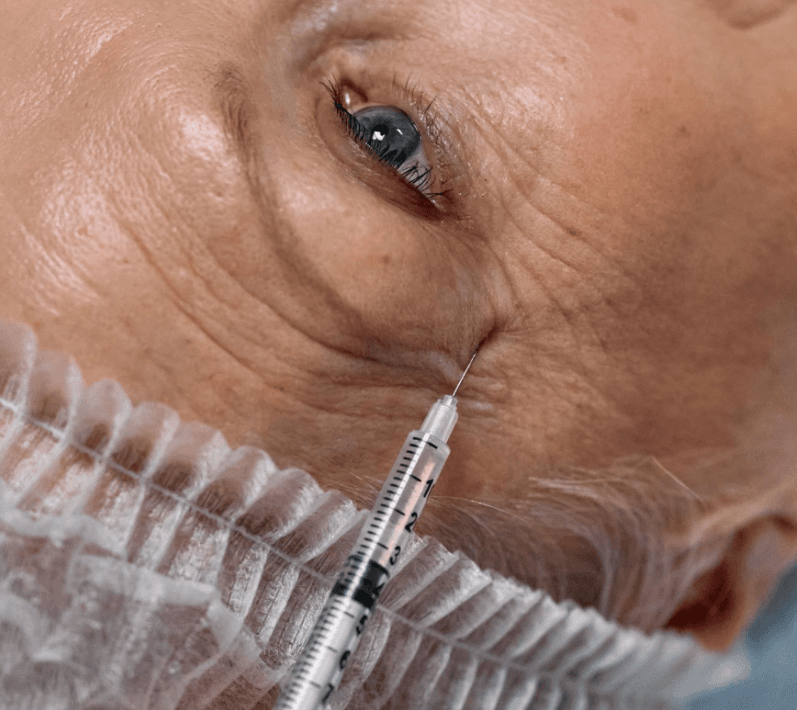
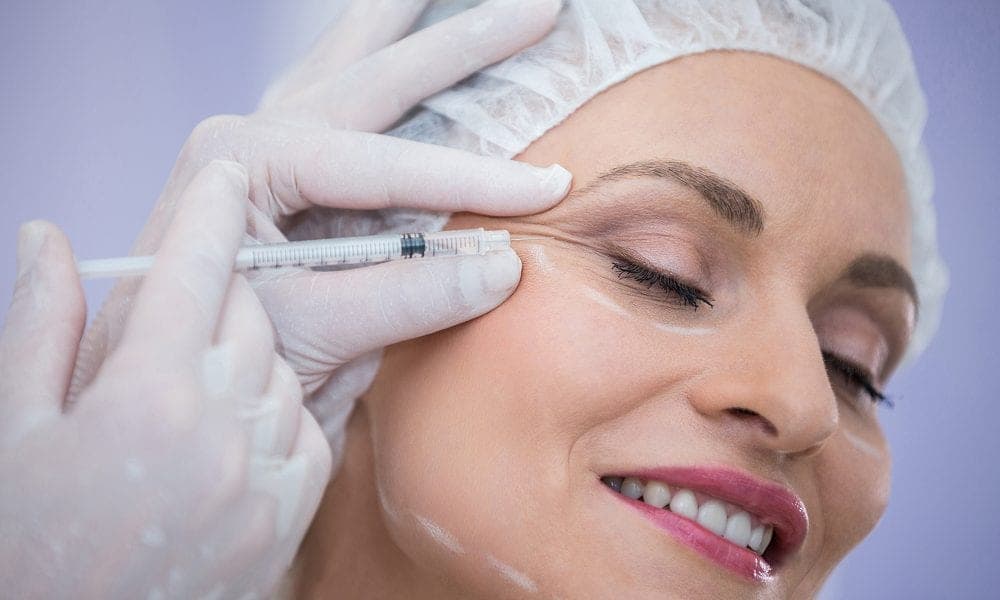
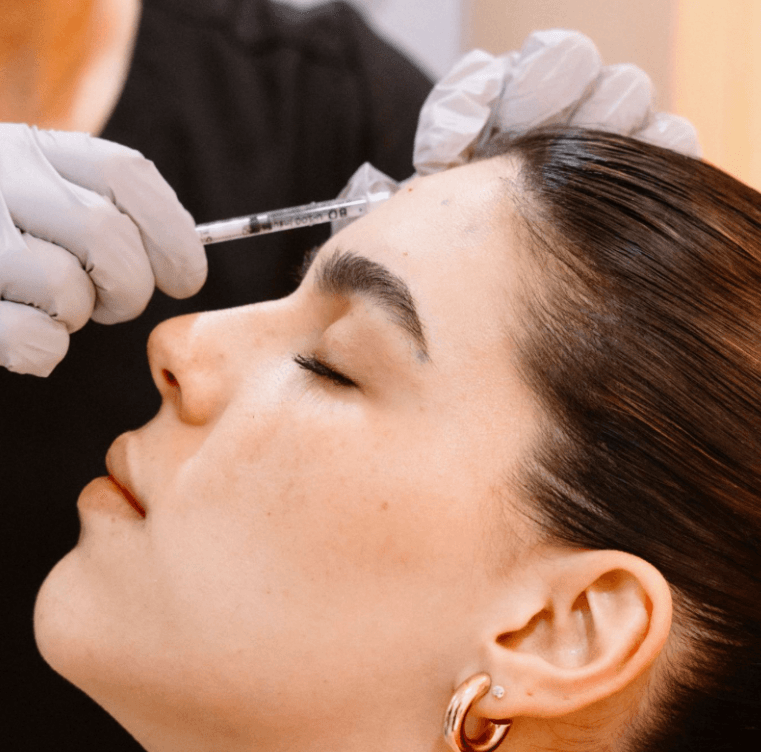
Forehead filler is a non-surgical treatment that uses dermal filler to add volume or improve the contour of the forehead.
The filler is usually made from hyaluronic acid, a substance naturally found in the body. Depending on the patient’s anatomy and treatment goals, it may be used to address:
- A flatter forehead
- Mild contour irregularities
- Hollow areas
- Asymmetry
- Changes in facial volume
- A lack of smooth transition between the forehead and temples
- Certain signs of age-related volume loss
The aim is generally to create a more balanced appearance rather than make the forehead look noticeably larger or overfilled.
Forehead filler may also be discussed alongside temple treatment, as the forehead and temples contribute to the overall shape of the upper face.
What Does Temple Filler Do?
Many people searching for forehead filler are also interested in understanding what does temple filler do and how it differs from treatment to the forehead itself.
The temples are the areas at the sides of the head, between the outer eye and the hairline. They can become hollow due to genetics, ageing, weight loss or changes in facial volume.
Temple filler may help to:
- Restore volume to hollow temples
- Soften a sunken appearance
- Improve the transition between the forehead and cheeks
- Create a more balanced upper-face contour
- Reduce the appearance of certain shadows
- Improve facial harmony when volume loss is the main concern
Forehead and temple filler are not interchangeable. The treatment needs to be planned according to the individual’s facial structure, the location of the hollowing and the desired result.
What Can Forehead Filler Treat?
Forehead filler may be considered for several cosmetic concerns, although suitability depends on the cause and severity of the issue.
| Concern | How forehead filler may help | Important consideration |
| A flat-looking forehead | Adds carefully placed volume to improve contour | The result should remain proportionate to the rest of the face |
| Mild forehead hollowing | Restores volume where it has been lost | Hollowing may also be related to bone structure or skin changes |
| Contour irregularities | Creates a smoother transition across selected areas | Not every irregularity can or should be corrected with filler |
| Mild asymmetry | Improves balance between the two sides | Perfect symmetry is not always possible |
| Age-related volume loss | Replaces some lost volume | Filler does not treat all signs of ageing |
| A hollow transition between the forehead and temples | Improves the overall upper-face contour | Forehead and temple treatment may need to be assessed together |
What Are the Benefits of Forehead Filler?
1. Improves Forehead Contour
Forehead filler may help create a smoother, more rounded contour when the forehead appears flat or uneven.
The treatment is carefully tailored to the individual rather than following a standard shape. This is important because the ideal forehead contour varies between people and can be influenced by facial proportions, ethnicity, age and natural anatomy.
2. Restores Lost Volume
Ageing, weight loss and natural changes in facial structure can lead to volume loss in the forehead and temples.
In suitable patients, filler may restore some of this volume and soften a sunken appearance.
3. Creates Better Facial Balance
The forehead is part of the upper third of the face. Changes in its contour can affect how the eyes, eyebrows, temples and cheeks appear in relation to one another.
Carefully placed filler may help improve balance between these areas without changing the person’s overall facial identity.
4. Can Improve Mild Asymmetry
Most faces are naturally asymmetrical. However, differences in volume or contour may sometimes be noticeable.
Forehead filler may help reduce mild asymmetry when it is caused by a difference in soft-tissue volume. It cannot correct every type of asymmetry, particularly when the cause is related to bone structure.
5. Offers a Non-Surgical Option
Unlike surgical forehead contouring, filler treatment does not involve an incision or a lengthy recovery period.
However, “non-surgical” does not mean risk-free. The forehead is a technically demanding area, and treatment should only be carried out by an appropriately qualified and experienced medical practitioner.
Can Forehead Filler Treat Forehead Lines?
Forehead filler is not usually the first treatment considered for expression lines caused by repeated muscle movement.
Dynamic forehead lines are often related to the activity of the frontalis muscle. These lines may be more noticeable when raising the eyebrows or making facial expressions.
Depending on the cause, other treatments may be more suitable, such as:
- Anti-wrinkle injections for selected expression lines
- Skincare and sun protection
- Treatments that improve skin quality
- Other resurfacing or skin-tightening procedures
Filler may sometimes be considered when a line is related to a structural indentation or volume loss, but it should not be used simply to fill every forehead wrinkle. Our guide to how to get rid of frown lines covers the lines between the brows in more detail.
A consultation can help distinguish between lines caused by muscle movement, skin quality and facial structure.
Can Forehead Filler Treat a Large Forehead?
Forehead filler is not generally used to reduce the size of the forehead.
The perceived size of the forehead may be influenced by:
- Hairline position
- Forehead height
- Brow position
- Facial proportions
- Skull shape
- Hair density
- Volume distribution
Adding filler may improve contour in selected patients, but it does not lower the hairline or physically reduce forehead height. In some cases, adding volume could make the forehead appear more prominent.
The most suitable approach depends on what is creating the concern.
Can Forehead Filler Improve a Receding Hairline?
Forehead filler does not treat hair loss or change the position of the hairline.
If a receding hairline is the main concern, a medical assessment may be more appropriate to identify possible causes and treatment options. Forehead filler may only be relevant if there is a separate concern about the contour of the forehead itself.
What Are the Risks of Forehead Filler?
The forehead is a high-risk area for dermal filler because of its blood supply and the important vessels that connect with the eyes.
Possible side effects include:
- Bruising
- Swelling
- Redness
- Tenderness
- Temporary unevenness
- Lumps or irregularities
- Infection
- Persistent swelling
- Skin discolouration
- Vascular complications
Rare but serious complications can occur if filler enters or compresses a blood vessel. These may include skin damage, visual disturbance or, in very rare cases, loss of vision.
This is why forehead filler should not be treated as a routine or simple injection. The practitioner must have detailed knowledge of the relevant anatomy and be able to recognise and manage complications promptly.
Why Is Forehead Filler Considered a High-Risk Treatment?
The forehead contains blood vessels that may connect with the vessels supplying the eyes. If filler enters a blood vessel, it can potentially affect blood flow to the skin or eye.
The risk is not eliminated by using a small amount of filler or by choosing a particular injection technique. Safety depends on several factors, including:
- The patient’s anatomy
- Previous treatments
- The product used
- The injection technique
- The practitioner’s experience
- Appropriate assessment and complication management
A responsible consultation should include a discussion of both the potential benefits and the risks. Forehead filler should only be considered when the expected improvement justifies the risks involved.
Who May Be Suitable for Forehead Filler?
Forehead filler may be considered for adults who have:
- A mild contour concern
- Localised volume loss
- A suitable facial structure
- Realistic expectations
- Good general health
- An understanding of the potential risks
It may be less suitable for people with:
- Significant forehead or temple swelling
- Active skin infection
- Unexplained lumps or lesions
- Certain vascular conditions
- Previous complications from filler
- Unrealistic expectations
- A concern that would be better treated with another procedure
A previous history of filler treatment should always be discussed, particularly if the area has been treated more than once. Repeated treatment over many years can lead to facial overfilled syndrome, where the face gradually loses its natural proportions.
What Happens During a Forehead Filler Consultation?
A consultation should begin with a detailed assessment rather than an immediate decision to inject.
Your practitioner may examine:
- The shape and height of the forehead
- The position of the hairline and eyebrows
- The relationship between the forehead and temples
- Existing hollows or contour irregularities
- Facial asymmetry
- Skin quality
- Previous filler treatment
- Any signs of swelling or inflammation
They may also assess whether your concern is caused by volume loss, facial structure, muscle activity or another factor.
The practitioner should explain:
- Whether forehead filler is suitable
- What improvement may realistically be achieved
- Whether temple treatment may also be relevant
- The potential risks
- The expected recovery period
- Whether an alternative treatment may be safer or more effective
What Is the Recovery Like After Forehead Filler?
Recovery varies depending on the amount of filler used and the technique involved.
You may experience temporary:
- Swelling
- Bruising
- Redness
- Tenderness
- Mild pressure or tightness
The forehead may look slightly fuller immediately after treatment, but this does not necessarily represent the final result. Swelling can affect the appearance during the first few days.
Your practitioner will advise you on aftercare and when to seek help. You should contact the clinic urgently if you experience severe pain, changes in skin colour, unusual swelling or any visual symptoms.
How Long Does Forehead Filler Last?
Forehead filler is temporary. The duration of the result depends on:
- The type of filler used
- The amount injected
- The treatment area
- Your individual metabolism
- Your facial movement
- Lifestyle factors
- Whether the area has been treated previously
Some patients may notice the result for many months, while others may experience a shorter or longer duration.
Further treatment should only be considered after the area has settled and the result has been assessed. Adding more filler too soon may increase the risk of an overfilled appearance or complications.
Can Forehead Filler Be Reversed?
If a hyaluronic acid filler has been used, it may be possible to dissolve it with hyaluronidase.
However, dissolving filler is not always a straightforward process. The decision depends on:
- The product used
- The cause of the concern
- The amount of filler present
- The location of the filler
- The patient’s symptoms
- The practitioner’s assessment
Not every problem should be managed by adding more filler. In some cases, the safest approach may be to allow the area to settle or consider dissolving existing product.
Final Thoughts on Forehead Filler
Forehead filler may help improve selected contour concerns, restore lost volume and create a smoother transition between the forehead, temples and surrounding facial features.
However, it is not suitable for every forehead concern. It does not reduce forehead height, treat hair loss or necessarily improve expression lines. The treatment also carries important risks because of the blood vessels and structures in the area.
If you are considering forehead filler or want to understand what does temple filler do, a detailed consultation is the best way to determine whether treatment is appropriate. At Perfect Eyes Clinic, an individual assessment can help identify the underlying cause of your concern, explain realistic treatment options and ensure that any proposed approach is carefully tailored to your facial anatomy.
Frequently asked questions
Still unsure? Our team is glad to talk you through anything before you book.
- Forehead filler can be performed safely in selected patients, but it is considered a technically demanding and higher-risk area. A detailed assessment and treatment by an experienced medical practitioner are essential.
- It adds volume, so it may make the forehead appear fuller. The aim is usually to improve contour or restore volume rather than create an excessively prominent forehead.
- It may subtly improve the contour of the upper face, but it should not dramatically change your facial identity. The result depends on the amount of filler used and the underlying anatomy.
- Temple filler is used to restore volume to hollow areas at the sides of the head. Forehead filler is used to address contour or volume concerns across the forehead. The two areas may be assessed together, but they are not treated in the same way.
- It is not usually the first treatment for expression lines caused by muscle movement. Other treatments may be more appropriate depending on whether the lines are caused by muscle activity, skin quality or structural changes.
- The initial swelling may improve over several days, but the final result should be assessed once the area has settled. Your practitioner will advise you on the appropriate review period.
- Serious vascular complications, including visual loss, are rare but possible with facial filler injections. This is one of the reasons forehead filler should only be performed by a suitably qualified and experienced medical practitioner.
- Some hyaluronic acid fillers can be dissolved using hyaluronidase. However, the decision to dissolve filler depends on the product used and the specific concern.
- It may be considered in selected patients, but a flat forehead is not necessarily a problem that requires treatment. The practitioner should assess facial proportions and explain whether filler would create a natural and balanced result.