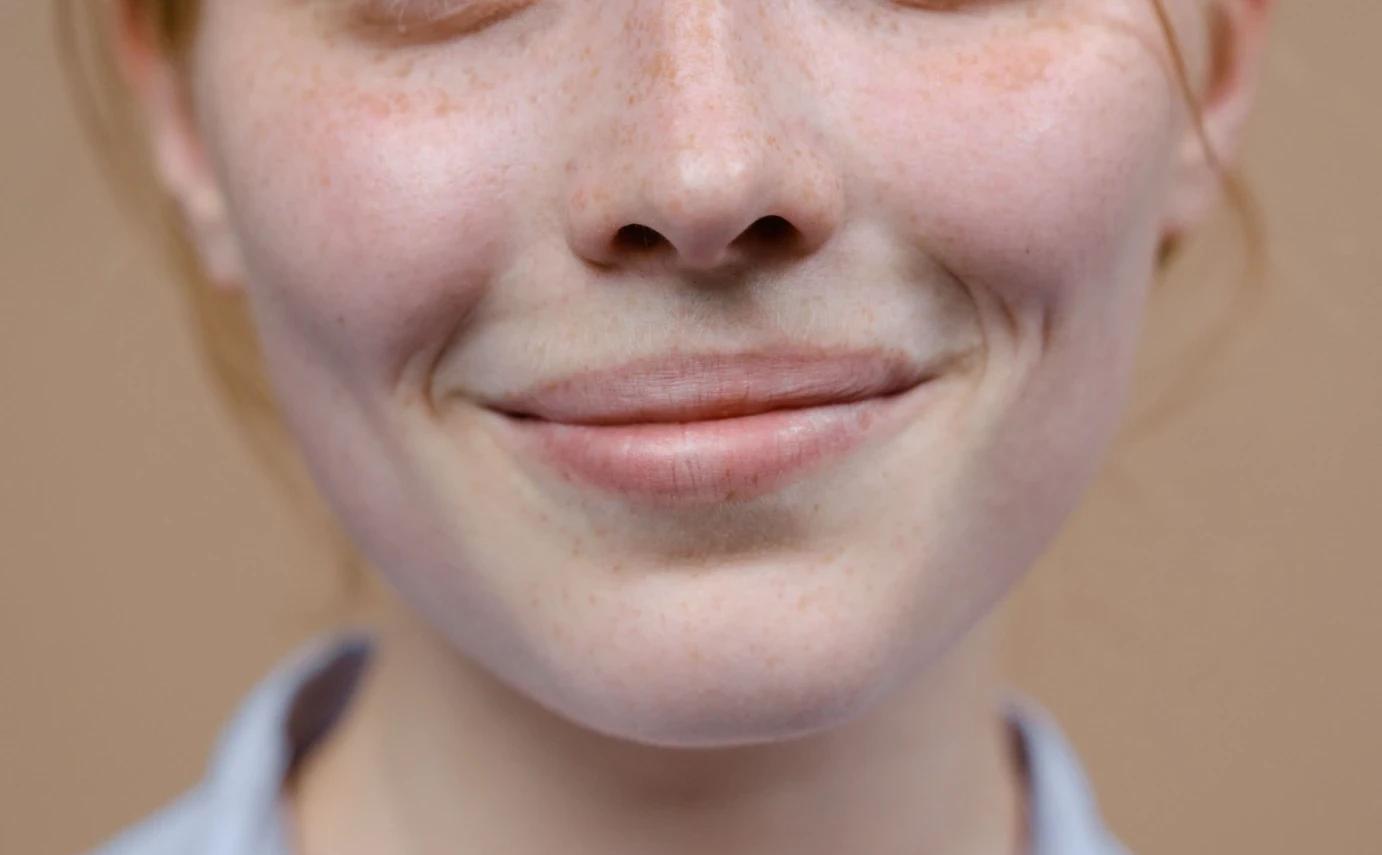
Marionette lines are the lines that extend downwards from the corners of the mouth towards the chin and jawline. They can become more noticeable with age and may make the corners of the mouth appear to turn downwards.
But marionette lines are not simply caused by “loose skin”.
Several structures contribute to their appearance, including the skin, facial fat, muscles, retaining ligaments and underlying bone. Changes in these structures can happen gradually over time, making the lines deeper or more visible.
This is why treating marionette lines is not always about filling the line itself.
A proper consultation looks at what is causing the line, how the surrounding lower face has changed and whether the mouth corners, chin, jowls or jawline are also contributing.
What Are Marionette Lines?
Marionette lines, also called labiomandibular or melomental folds, are creases that extend from the corners of the mouth towards the chin or lower jaw.
They are a normal part of facial anatomy and can be present to some degree even in younger people.
With ageing, they may become:
- Longer
- Deeper
- More visible at rest
- More pronounced when speaking or smiling
- Associated with downturned mouth corners
- More noticeable alongside jowls or jawline changes
The name comes from their resemblance to the lines around the mouth of a marionette puppet.
Why Do Marionette Lines Develop?
There is rarely one single cause.
Marionette lines can develop through a combination of:
- Age-related changes in facial fat
- Skin laxity
- Changes in collagen and elastin
- Muscle activity
- Changes in the retaining ligaments
- Changes in the underlying bone
- Jowl formation
- Loss of support around the chin and lower face
Research describes marionette lines as a complex interaction between ageing, facial anatomy, fat redistribution, muscle activity and changes in the supporting structures of the lower face.
How Does Ageing Affect Marionette Lines?
Facial ageing affects several layers rather than simply causing the skin to “drop”.
1. Changes in Facial Fat
The face contains multiple fat compartments.
With age, some compartments can lose volume while others can become more prominent or shift position.
In the lower face, changes in the jowl and surrounding fat compartments can contribute to a less defined jawline and make the area beside the mouth appear heavier.
2. Skin Becomes Less Elastic
Collagen and elastin gradually change as we age.
The skin may become thinner and less able to resist the effects of movement and tissue changes underneath it.
As a result, a crease that was once visible mainly during facial expression may become more apparent when the face is relaxed.
3. Changes in the Supporting Ligaments
Facial retaining ligaments help hold soft tissue in position.
Changes in these supporting structures can contribute to the formation of depressions and folds as surrounding tissues change.
The mandibular ligament is particularly relevant to the anatomy of the marionette line.
4. Changes in the Underlying Bone
The maxilla and mandible provide structural support for the tissues of the lower face.
Age-related changes to this support can affect the position and appearance of the overlying soft tissues.
This can contribute to changes around the mouth, chin and jawline.
What Is the Role of the Depressor Anguli Oris Muscle?
The depressor anguli oris, or DAO, is one of the muscles involved in the position of the corners of the mouth.
Its action pulls the corners of the mouth downwards.
When the DAO is particularly active, it can contribute to a downward position of the mouth corners and make marionette folds more noticeable.
However, muscle activity is only one part of the picture.
If a marionette line is caused primarily by tissue descent, volume changes, or skin laxity, treating muscle activity alone will not necessarily address the entire concern.
This is why assessment matters.
Why Do the Corners of the Mouth Turn Downwards?
Several factors can contribute to downturned mouth corners.
These include:
- DAO muscle activity
- Loss of soft-tissue support
- Changes in facial fat
- Jowl formation
- Skin laxity
- Changes in the chin
- Natural facial anatomy
Downturned oral commissures can give the lower face a more serious, tired or sad appearance, even when you are not expressing those emotions.
This does not mean that a downturned mouth needs to be corrected.
The important question is whether the change is something you want to address and, if so, what is causing it.
Are Marionette Lines the Same as Nasolabial Folds?
No.
They are two different types of facial folds.
Nasolabial folds extend from the sides of the nose towards the corners of the mouth.
Marionette lines extend downwards from the corners of the mouth towards the chin and jawline.
They can become more noticeable at the same time, but they involve different anatomical areas.
A person may have prominent nasolabial folds without significant marionette lines, or vice versa.
Are Marionette Lines a Sign of Ageing?
They can be, but not always.
Some people naturally have visible marionette lines because of their facial anatomy.
However, age-related changes can make them more prominent.
A 2020 study examining facial ageing in Asian Indian populations found that marionette lines became more apparent with increasing age, although the timing and severity varied between groups.
Genetics, facial structure, skin characteristics and individual patterns of ageing all influence when these lines become noticeable.
Can Weight Loss Make Marionette Lines More Visible?
Significant weight loss can alter the amount and distribution of facial fat.
If volume is lost from areas that previously provided support to the lower face, existing folds may become more visible.
At the same time, substantial weight loss can leave some people with additional skin laxity.
This means that a change in marionette lines after weight loss does not automatically mean that more volume should be added.
The underlying anatomy needs to be assessed first.
What Are Jowls and How Do They Relate to Marionette Lines?
Jowls are areas of soft-tissue fullness that become more noticeable along the lower cheek and jawline.
They can develop as facial fat compartments change position and the supporting structures of the lower face become less effective.
Jowls and marionette lines often occur together because they are anatomically connected.
As the jowl becomes more prominent, it can increase the contrast between the tissue beside the mouth and the surrounding lower face, making the marionette line more visible.
This is why treating the line without considering the jowl may not always produce the expected result.
What Does a Marionette Line Consultation Assess?
A good consultation does not begin by deciding how much filler or which treatment to use.
It begins by understanding why the marionette lines are visible.
1. The Face Is Assessed From the Front
From the frontal view, the clinician may assess:
- Position of the mouth corners
- Depth of the marionette lines
- Facial symmetry
- Jowls
- Chin shape
- Lower-face proportions
- Jawline definition
- Overall facial balance
This helps establish how the marionette lines relate to the rest of the face.
2. The Profile Is Assessed
A side view provides information about the relationship between:
- Lips
- Chin
- Jawline
- Jowls
- Neck
A recessed or relatively small chin, for example, can influence how the lower face appears and may affect the overall impression of the marionette area.
3. The Three-Quarter View Is Considered
The three-quarter view is particularly useful for assessing how the cheek transitions into the lower face.
It can show:
- Jowl formation
- Loss of cheek support
- Lower-face volume changes
- Jawline definition
- Facial asymmetry
Looking at several angles helps prevent the consultation from becoming too focused on one visible line.
4. The Mouth Is Assessed at Rest and During Movement
Marionette lines are affected by facial movement, so they should not only be assessed when the face is completely still.
You may be asked to:
- Smile
- Speak
- Relax your face
- Move your mouth naturally
This allows the clinician to see whether the lines are primarily dynamic, static or a combination of both.
5. The Mouth Corners Are Examined
The position of the oral commissures is an important part of the assessment.
The clinician may consider whether the corners are:
- Neutral
- Naturally downturned
- Being pulled down by muscle activity
- Affected by surrounding tissue descent
This can help determine whether the mouth corners themselves require attention or whether the apparent change is mainly caused by surrounding structures.
6. The Chin Is Assessed
The chin and marionette region are closely connected.
The clinician may assess:
- Chin projection
- Chin height
- Chin width
- Chin volume
- The labiomental fold
- Relationship between the lower lip and chin
A change in chin structure or support can affect the appearance of the entire lower face.
7. The Jawline Is Assessed
A marionette line does not exist independently of the jawline.
The clinician may assess:
- Jowls
- Mandibular definition
- Pre-jowl hollowing
- Submental fullness
- Skin laxity
- Neck contour
This helps establish whether the marionette line is part of a broader pattern of lower-face ageing.
8. Skin Quality Is Assessed
The skin itself is also relevant.
The clinician may look at:
- Elasticity
- Thickness
- Fine lines
- Sun damage
- Texture
- Laxity
If poor skin quality is a significant part of the concern, adding volume alone may not produce the desired result.
Why Is It Important to Identify the Cause?
Consider two people with similar-looking marionette lines.
One may have:
- Strong cheek support
- Good skin elasticity
- Minimal jowling
- Pronounced DAO activity
Another may have:
- Significant jowling
- Lower-face volume changes
- Skin laxity
- Reduced chin support
Although the visible lines may look similar, their underlying anatomy is very different.
The appropriate treatment approach may therefore be very different too.
Does a Marionette Line Always Need Filler?
No.
This is one of the most important points to understand.
A marionette line may be influenced by:
- Muscle activity
- Skin laxity
- Jowls
- Volume changes
- Chin projection
- Bone structure
- Retaining ligaments
Simply placing filler directly into the deepest part of the line may not address the factors that created it.
In some patients, improving surrounding support can soften the appearance of the line. In others, the line itself may be an appropriate treatment target.
What Treatment Options Can Be Considered?
Once the cause has been established, different approaches may be discussed.
Dermal Fillers
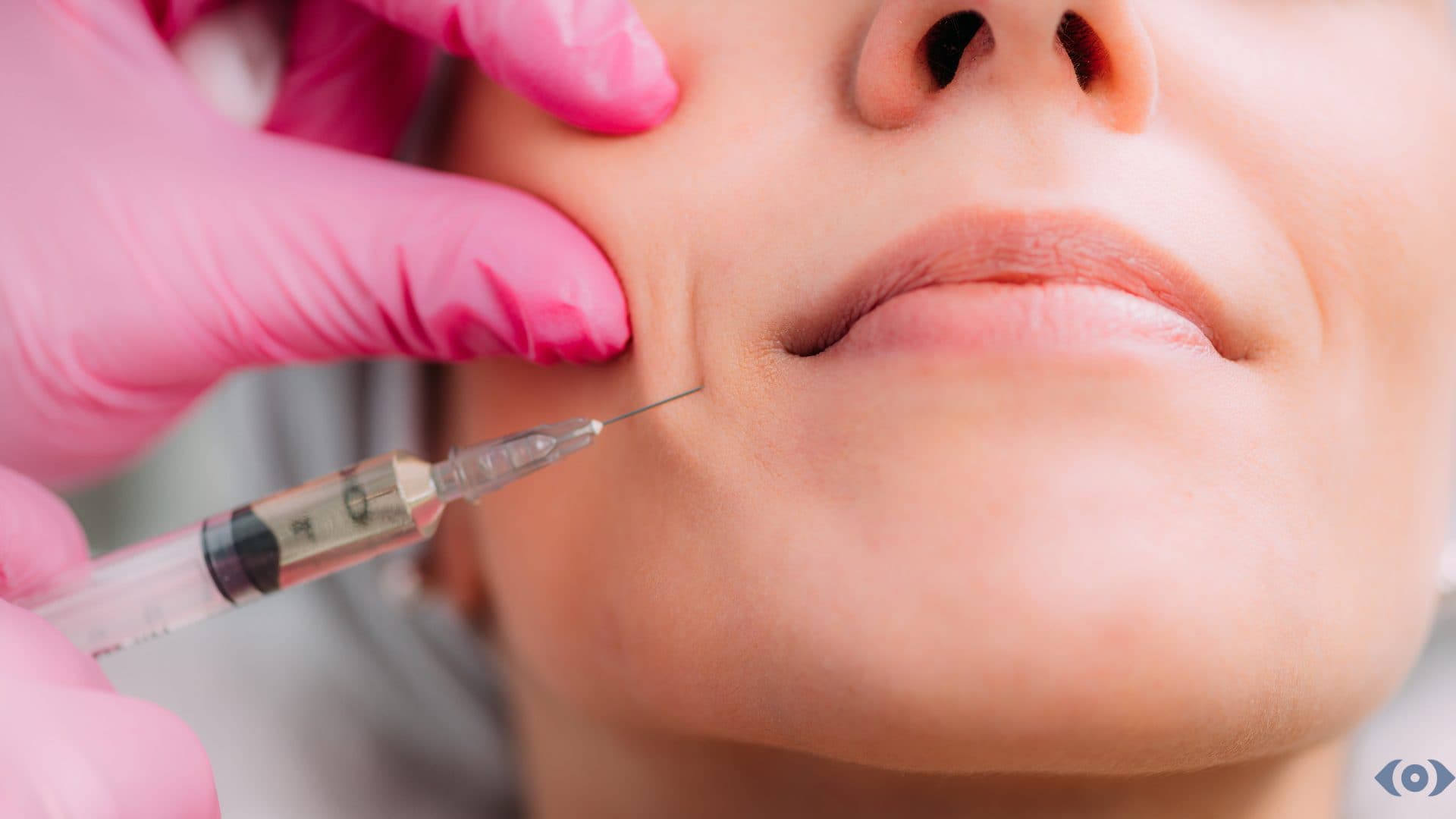
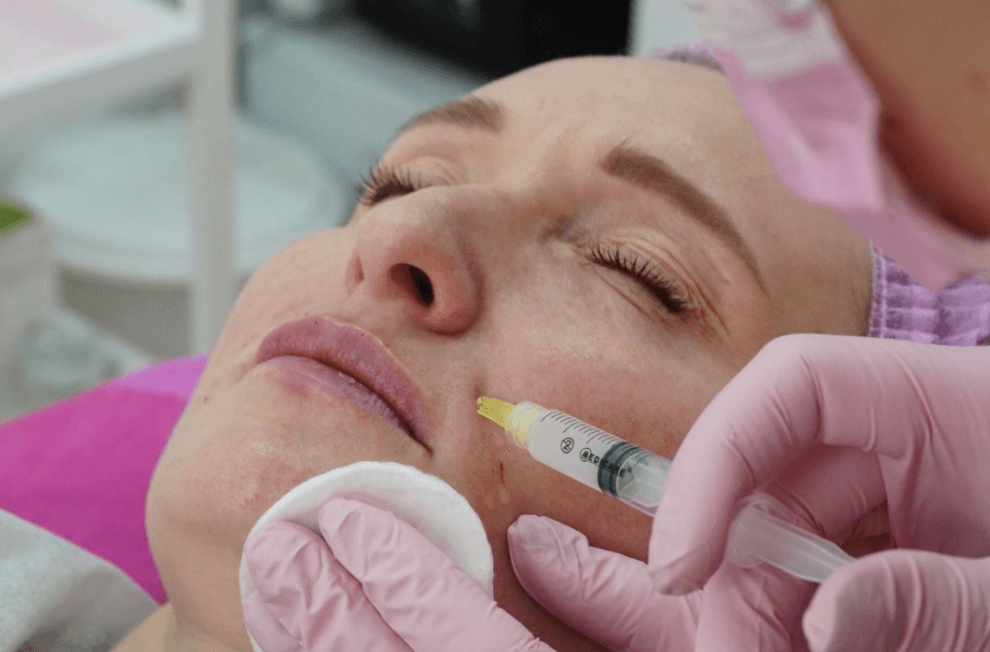
Hyaluronic acid dermal fillers can be considered in selected patients where loss of volume or structural support contributes to the appearance of the marionette region.
Treatment may involve the marionette line itself, the prejowl area, chin or surrounding structures depending on the anatomy.
Expert recommendations emphasise assessing and addressing relevant structural volume loss before directly treating the marionette line in appropriate patients.
The aim should be to soften the fold and restore proportion rather than completely erase a natural facial feature.
Wrinkle-Relaxing Treatments
Where downward muscle activity is a significant contributor, carefully placed wrinkle-relaxing treatment may be considered.
The DAO can pull the corners of the mouth downwards, so reducing excessive activity may help rebalance the forces acting around the mouth.
This treatment requires precise knowledge of facial anatomy because the muscles around the mouth have important roles in normal expression and movement.
Skin-Quality Treatments
Where fine lines, reduced elasticity or poor skin quality contribute significantly, treatments designed to improve collagen and skin texture may be considered.
These may complement other approaches rather than directly replacing them.
Energy-Based Treatments
In selected patients, energy-based treatments may be considered when skin laxity is part of the concern.
The appropriate technology depends on the degree of laxity, skin type and overall treatment goals.
Surgical Rejuvenation
More advanced ageing involving significant skin laxity, jowling or tissue descent may require surgical assessment.
Facelift or lower-face procedures can address structural tissue descent in a way that non-surgical treatments cannot.
Surgery is therefore a different treatment category with different risks, recovery and expected outcomes.
Why Is the Marionette Area Technically Challenging?
The lower face is a highly mobile area containing muscles, nerves and blood vessels in close anatomical relationship.
The facial artery and mental nerve are among the important structures that need to be considered when performing injectable procedures in this region.
This is why marionette treatment should not be approached as simply “filling a line”.
The practitioner needs to understand:
- Facial anatomy
- Tissue planes
- Muscle activity
- Vascular anatomy
- Facial proportions
- How the tissues move
A medical assessment is particularly important when injectable treatment is being considered.
What Does a Good Marionette Line Consultation Look Like?
A consultation should help you understand:
What has changed?
Has the line developed because of ageing, muscle activity, volume changes, skin laxity or a combination?
What is contributing to it?
Are jowls, the chin, jawline or mouth corners also involved?
What can realistically be improved?
Some degree of facial folding is natural and cannot or should not be completely removed.
Which treatment, if any, is appropriate?
The answer may involve filler, wrinkle-relaxing treatment, skin-quality treatments, energy-based treatments, surgery or no treatment.
Can Marionette Lines Be Prevented?
Not completely.
They are part of normal facial anatomy and often become more prominent as we age.
However, maintaining good skin health can help reduce avoidable factors that contribute to premature skin ageing.
This includes:
- Using broad-spectrum SPF
- Avoiding smoking
- Maintaining skin hydration
- Protecting the face from excessive sun exposure
- Following a consistent skincare routine
- Supporting overall skin health
These measures cannot stop the structural changes of ageing, but they can help maintain the quality of the skin.
What Does a Natural Result Look Like?
A natural result does not mean completely removing every line around the mouth.
The mouth is constantly moving, and some degree of folding is normal.
Depending on the cause, the goal may be to:
- Soften a deep crease
- Improve the position of the mouth corners
- Reduce the appearance of jowling
- Restore appropriate lower-face support
- Improve skin quality
- Create a smoother transition between the mouth and jawline
The aim should be to maintain normal facial movement and expression while improving the features that genuinely concern you.
Book a Consultation at Perfect Eyes Clinic
At Perfect Eyes Clinic, assessing marionette lines starts with understanding what is contributing to them.
The appearance of the lower face can be influenced by muscle activity, facial fat, skin laxity, jowling, chin structure and changes in the underlying facial framework.
A consultation allows the mouth, chin, jawline and surrounding tissues to be assessed from different angles and during facial movement.
If treatment is appropriate, the approach can then be tailored to your individual anatomy rather than simply treating the deepest part of the line.
The aim is not to remove every natural crease. It is to understand the underlying changes and make proportionate improvements while maintaining a natural appearance.
Frequently asked questions
Still unsure? Our team is glad to talk you through anything before you book.
- Marionette lines are folds that extend from the corners of the mouth down towards the chin or jawline. They are also known as labiomandibular or melomental folds.
- They can be caused by a combination of facial ageing, changes in facial fat, skin laxity, muscle activity, retaining ligaments and changes in the underlying bone.
- They often become more noticeable as the skin, facial fat, muscles, supporting tissues and underlying structures change with age.
- Downturned mouth corners can be influenced by the depressor anguli oris muscle, changes in soft-tissue support, jowling, skin laxity and individual anatomy.
- No. Nasolabial folds run from the sides of the nose towards the mouth, while marionette lines extend downwards from the corners of the mouth towards the chin.
- Significant weight loss can alter facial volume and soft-tissue support, potentially making existing lines more visible. However, the effect varies between individuals.
- Not necessarily. The appropriate treatment depends on what is causing the lines. A consultation can establish whether volume loss, muscle activity, skin laxity, jowling or another factor is contributing.
- It can help in selected patients when downward muscle activity, particularly from the depressor anguli oris, contributes significantly to the position of the mouth corners.
- Yes. Depending on the cause, treatment may involve wrinkle-relaxing treatment, skin-quality treatments, energy-based treatments or surgical approaches.
- In some patients, changes in the cheek, chin or surrounding lower-face structures contribute to the appearance of the marionette lines. Addressing the underlying support may therefore soften the lines without directly filling the fold.
- All aesthetic procedures carry risks. The lower face contains important nerves, muscles and blood vessels, so injectable treatments require appropriate anatomical knowledge and technique.
- A clinician may assess the lines at rest and during facial movement, as well as examine the mouth corners, chin, jawline, jowls, skin quality and overall facial proportions.
- You should expect an assessment of the likely causes of your marionette lines, an examination of the surrounding lower face and a discussion of suitable treatment options, realistic expectations and potential alternatives.
- No. Marionette lines are a normal part of facial anatomy. Treatment can aim to soften their appearance and improve lower-face balance without eliminating every natural facial crease.