You can lift your eyebrows naturally with daily facial massage, targeted muscle exercises, and clinical skincare products. However, to achieve a proper, permanent lift, you may require advanced medical treatments.
A drooping brow (medically known as Brow Ptosis) is one of the most subtle but significant signs of ageing. It can make the eyes look smaller. It can make the eyelids look heavy. Most frustratingly, it can make someone appear tired, sad, or angry, even when they feel perfectly fine.
If you often raise your eyebrows to see better or look awake in photos, you're facing this heaviness.
Surgery is the best option for a permanent fix, but many patients ask about natural ways to reverse the drop. This guide covers the anatomy of the brow, offers simple lifestyle tips, and outlines medical treatments for when you need more help.
The Anatomy: Why Do Eyebrows Drop?
To understand how to lift the brow, one must first understand why it falls. It is rarely just one factor; it is usually a combination of three biological changes.Gravity and Skin Elasticity
The skin on the forehead is constantly fighting gravity. As we age, we lose collagen and elastin, the springs that keep skin tight. Without this support, the skin stretches and slides down. This pushes the eyebrow below the orbital rim, which is the bone above the eye.Muscle Activity
The face is a battleground of muscles. The frontalis muscle (on the forehead) tries to raise the brow. The orbicularis oculi (around the eyes) pulls the brow down. Over time, the depressor muscles, which pull down, usually get stronger. This drags the brow lower.Bone and Fat Loss
This is the physics aspect often overlooked. The skull shrinks as we age. This happens especially around the temples and the eye socket. The fat pads that sit under the brow also deflate. Think of a tent: if you remove the tent pole (the bone and fat), the canvas (the skin) will sag.Part 1: Natural Methods to Lift the Brow
For mild cases or prevention, some natural methods can enhance the look of the upper face. These methods focus on muscle health and skin quality.Facial Yoga and Massage
Just as the body needs exercise, facial muscles can benefit from targeted movement. Face Yoga involves specific exercises designed to strengthen the frontalis muscle (the lifter).- The Forehead Lift: Put your palms on your forehead. Then, gently push up while looking down to create resistance. This strengthens the lifting muscle over time.
- Lymphatic Drainage: Gentle massage around the eyes can reduce fluid retention. Heavy fluid acts like a weight on the eyelid. Massaging outward toward the ears helps relieve weight. This makes the eye area look lighter and more open.
Managing Eye Strain
In the modern world, screens are a major enemy of the youthful eye. When we stare at computers or phones, we tend to unconsciously frown or squint. This activates the depressor muscles that pull the brow down. Chronic squinting can cause forehead lines. This makes the face look heavy and tired. Adopting simple habits to reduce tension is essential. For example, use the ‘20-20-20 rule.’ Look at something 20 feet away for 20 seconds every 20 minutes. This can help relax your facial muscles. You can read more about these techniques in our guide on ‘how to rest your eyes.’Hydration and Diet
Dehydrated skin is thinner and less elastic. Drinking plenty of water helps maintain the skin’s snap. A diet high in antioxidants and healthy fats, like Omega-3, helps support the collagen that keeps the brow in place.Part 2: Non-Surgical Medical Tweaks
Natural methods are excellent for maintenance, but they cannot replace lost bone or remove excess skin. When lifestyle changes are not enough, non-surgical aesthetics offer a middle ground. These tweaks are designed to restore lost structural support, lifting the brow without a scalpel.The Chemical Lift (Anti-Wrinkle Injections)
This is the most common non-surgical solution. By carefully placing anti-wrinkle injections into the muscles that pull the brow down, a practitioner can weaken them. This allows the forehead muscle (which pulls up) to work unopposed. The result is a subtle lift of the eyebrow tail, often opening up the eye by a few millimetres. It is temporary (lasting 3-4 months) but highly effective for mild drooping.Restoring the Scaffold (Temple Fillers)
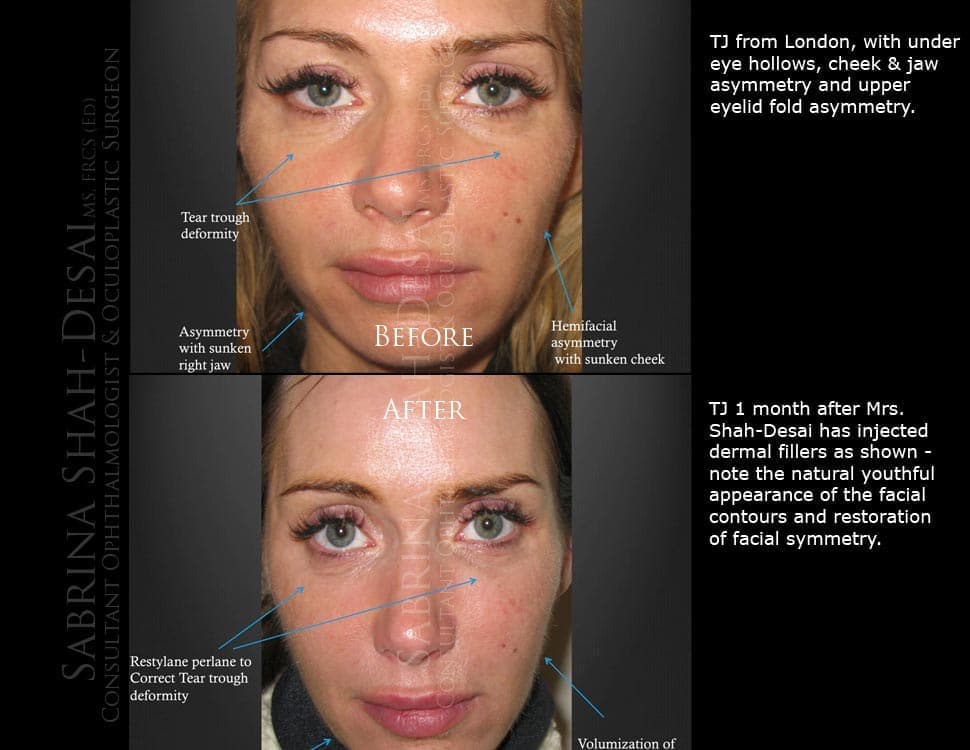
As mentioned, the temples lose volume with age. This creates a hollow look and removes the support for the outer eyebrow. Using temple fillers, a skilled practitioner can reinflate this area. It acts like putting the tent pole back up. By adding volume to the temple, the skin is stretched back to its original position, naturally lifting the brow's tail. Similarly, superior sulcus filler can be used if the hollow is directly above the upper eyelid. This adds volume to the brow bone area, pushing the skin forward and reducing the appearance of sagging.Skin Tightening (Ultrasound and Heat)
For patients who want to avoid needles, energy-based devices offer a solution. Treatments such as Sofwave or UltraClear Laser use heat to target deep layers of the skin. This heat triggers a wound-healing response, forcing the body to produce fresh, tight collagen. Over 3 to 6 months, the skin on the forehead tightens, creating a tighter mesh that pulls the brow upward naturally.Part 3: The Surgical Solution
There comes a point where the skin is simply too loose for fillers or lasers to be effective. If the brow has dropped significantly and is hooding over the eyelashes, surgery is the only way to remove the excess tissue.The Brow Lift
A Brow Lift is a surgical procedure that physically lifts the forehead tissues. It can be done in different ways:- Temporal Brow Lift: Focuses on lifting just the outer corners (the tail) of the brow, which is where drooping usually starts.
- Endoscopic Brow Lift: Uses tiny incisions in the hairline to lift the entire forehead.
Is It the Brow or the Eyelid?
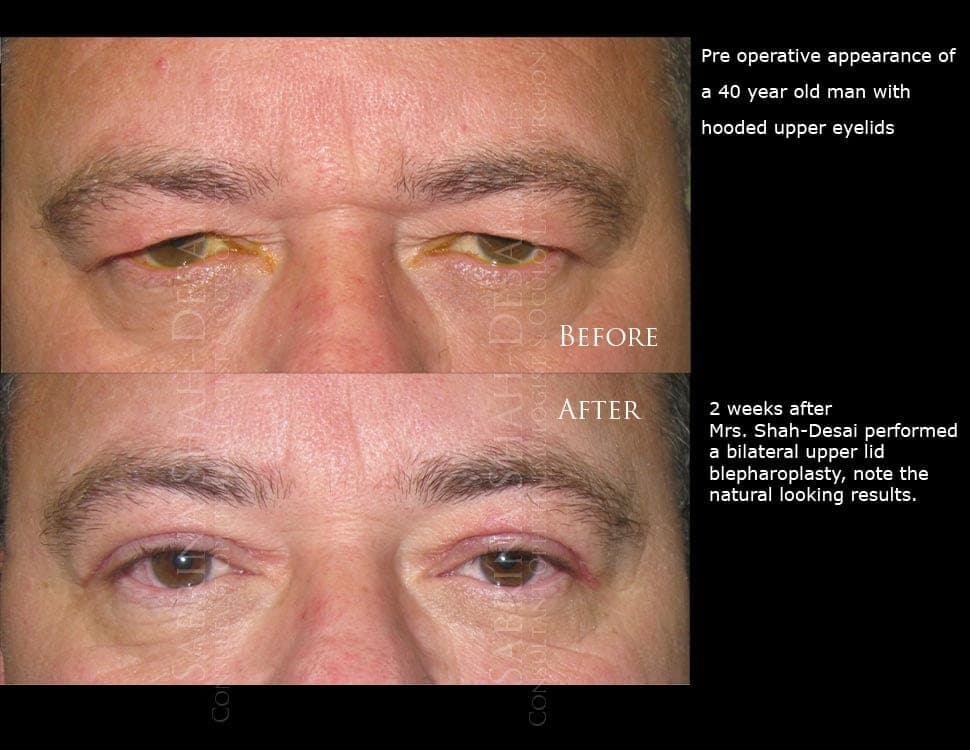
This is the most common confusion. Many patients believe they need a brow lift, but they actually have excess eyelid skin. This condition (Dermatochalasis) is treated with an upper eyelid blepharoplasty.- Brow Drop: The whole eyebrow has slid down.
- Lid Hooding: The eyebrow is in the right place, but the eyelid skin is loose.
Choosing the Right Path
Choosing between natural care, non-surgical tweaks, and surgery depends on the face's Physics.- The Pinch Test: Look in the mirror. Pinch the skin above the eyebrow. If it snaps back instantly, non-surgical tightening may be effective. If it moves slowly or feels very thin, elasticity is lost, and surgery may be required to achieve a satisfactory result.
- The Hollow Check: Look at the temples (the side of the head). Are they flat or concave (dipping inwards)? If there is a hollow, filling that space is often the fastest way to get a lift without surgery.
- The Strain Check: Do you suffer from headaches in the afternoon? Does your forehead feel tight? This often means you are using your forehead muscles to hold your eyes open. This is a real issue, not just a cosmetic one. It often requires medical treatment, such as ptosis surgery, to tighten the muscle that lifts the eyelid.
Summary
Lifting the eyebrows is rarely about doing just one thing. It is about holistic eye health.- Step 1: Start with the basics. Hydrate, sleep, and use the techniques to reduce stress-induced brow pull.
- Step 2: Restore the volume. Replace the lost bone structure with strategic filler.
- Step 3: Relax the pull. Use toxins to stop the depressor muscles from dragging the face down.
- Step 4: Remove the excess. If gravity has won, surgery remains the safest and most effective way to reset the clock.
Good to know
Frequently asked questions
Still unsure? Our team is glad to talk you through anything before you book.
- Face yoga can strengthen muscles. This may give a slight lift, especially for younger patients. However, it cannot shrink loose skin or replace lost bone. For moderate to severe drooping, it is unlikely to give a visible result on its own.
- A non-surgical lift using anti-wrinkle injections typically lasts 3-4 months. As the muscle action returns, the brow will gradually return to its original position. Regular maintenance is required to keep the result.
- Modern surgical techniques are designed to hide scars. In a temporal lift, the incision is usually hidden within the hairline. It is invisible once healed.
- Fox Eyes is a trend often achieved by threading the brow into an unnatural, high slant. A medical Brow Lift aims to bring the brow back to its youthful position. It focuses on the arch and tail, not on creating a slanted shape.
- The temple area can feel sensitive, but the procedure is usually very quick. Numbing cream is used, and the filler often contains anaesthetic. Most patients report pressure rather than sharp pain.