





Artificial Eyes and Orbital Implants

To rebuild the eye socket after removal of a blind eye.

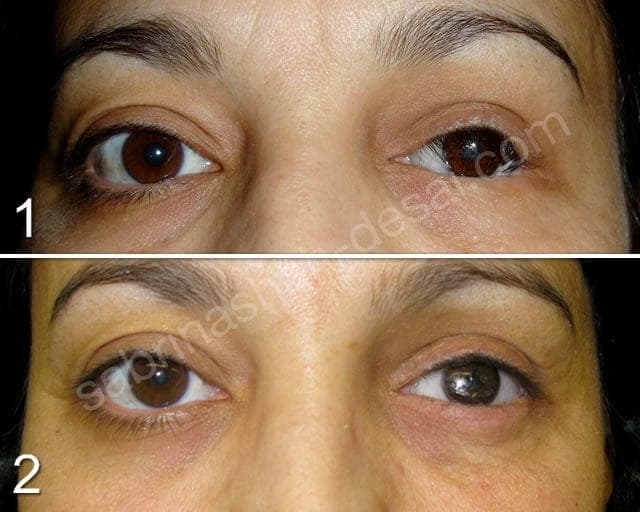
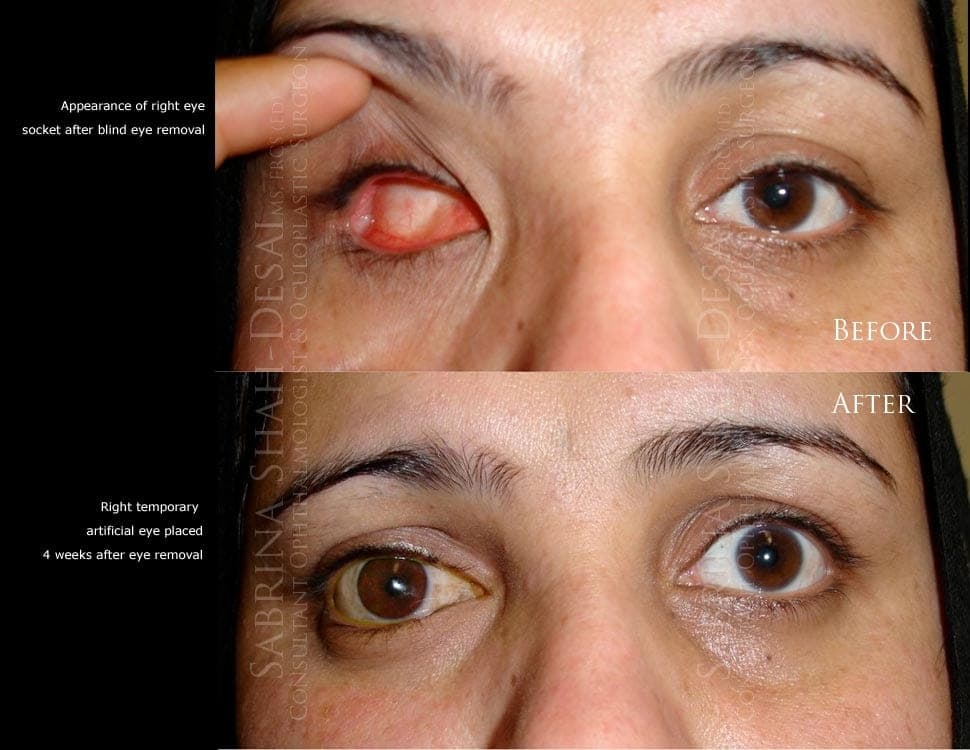
Before & AfterArtificial Eyes and Orbital Implants before and after, a patient of Dr Sabrina Shah-Desai

Accredited & recognised by

Artificial Eyes and Orbital Implants

At a Glance

Duration
60-90 Minutes
Anaesthesia
General
Hospital Stay
Day Case
Eye Padded
First 48 Hours
Artificial Eye Fitted
After 4-6 Weeks
Treatment Summary

How Orbital Implants Restore the Eye Socket

Orbital implants are usually used to replace either the entire eye or to fill an eviscerated eye. Think of the normal eyeball as an inflated balloon - once the eye has been enucleated or eviscerated, it looks like a deflated balloon and requires an implant to be placed in the coats of the eyeball or eye socket to restore volume.

Rarely, when there is a severe shortage of conjunctival lining and volume (for example, secondary to an exposed ball implant), a dermis fat graft is recommended (harvested from your buttock or abdomen). Four to six weeks after surgery, a prosthetic or artificial eye (which looks like a big contact lens) is placed over the implant. When the muscles of the eye socket move, the artificial eye moves too.

How Orbital Implants Restore the Eye Socket
Types of Orbital Implants
Treatment Summary

Types of Orbital Implants

Integrated implants are made of a permeable material, which allows the tissue in the eye socket to grow into it, thus making it part of the body. The commonly used integrated implant has been developed from coral, which is processed to match human bone and is called Hydroxyapatite (HA); another variety is Medpor.

Integrated implants are more expensive than other types of implant and may not be suitable for all patients (whose sockets have been damaged by radiotherapy or post extensive trauma and loss/shortage of the lining of the eyeball).

Non-integrated implants are made of a solid material, such as polymethylmethacrylate (PMMA), which is a type of acrylic plastic. When a non-integrated implant is fitted into the eye socket, it is either placed within the coats of the eyeball (after an evisceration) or wrapped in a mesh, to which the muscles are attached (post enucleation), reducing the risk of migration or extrusion.

After healing, the artificial eye (or prosthesis) is fitted and inserted. The artificial eye can also be pegged on to the orbital implant, which allows a larger range of movement than it would otherwise have. Pegging is generally carried out approximately a year after the implant has been inserted.

Procedure of Removal of an Eye and Insertion of an Orbital Implant

The procedure is performed in an operating theatre as day surgery under general anaesthetic, and takes approximately 60-90 minutes. The contents or entire eyeball is removed, an appropriately sized orbital implant is placed in the eye socket, and tissues are closed over it.

A temporary clear plastic shell (conformer) is fitted on top of the implant for a month after surgery to prevent the socket shrinking and give some shape while the socket heals. The eye is padded shut for the first 48 hours, and on removal, when you open your lids, you will see the moist pink lining of the socket (like the inside of your mouth). The conformer will look like a clear plastic shell with a hole in the centre, which allows for instillation of eyedrops. This conformer will stay in place until you are fitted with an artificial eye in 4-6 weeks. During this period, the pink colour of the lining will change to white.

The ocular prosthetist will create a detailed artificial eye to match your natural eye; this process can take up to a few days or weeks to perfect.

What Are the Risks of Orbital Implants and Wearing an Artificial Eye?

After enucleation or evisceration, there is a tendency for the lining of the eye socket (conjunctiva) to shrink over time. This can be controlled or reduced to a significant extent by wearing an artificial eye constantly. In addition, the tissues of the eye socket can undergo shrinkage, causing the upper and lower lid sulcus/fold to look deep and hollow (called post-enucleation socket syndrome).

Although wearing a larger prosthesis can reduce this appearance, the associated increase in weight can cause the lower lid to sag (ectropion). This can also present as instability of the prosthesis (falls out easily) or drooping of the eyelid (ptosis). As a result, a few patients ask for additional surgery to improve the aesthetic appearance, either by correcting the ptosis, tightening the lower lid, or improving the volume (removal of the old implant and insertion of a larger implant, placement of an orbital floor implant, or injection of fillers). Your surgeon will discuss the best options for you.

The artificial eye or prosthesis has certain inherent issues related to movement, never achieving the full range of movement of a normal eye. Range of movement can be improved by pegging, or by reducing the size of the artificial eye at the inner and outer corners.

Some patients develop an allergic response to the artificial eye, causing chronic discharge, which can be avoided by annual ultrasonic cleaning of the prosthesis.

After insertion of an orbital implant, there is a low risk of extrusion, migration or infection of the implant. Pegging of the implant can occasionally result in infection and extrusion of the implant, and a clicking noise when the eye moves.

← Blind Eye Removal

Real Patient Results

Artificial Eye Socket Reconstruction Before and After Result

Contracted left socket due to erratic artificial eye wear, with resultant upper and lower lid entropion and inability to retain the artificial eye (1), compared with the appearance two months after left socket reconstruction using a lining of the mouth graft, with the artificial eye now retained and no entropion (2). Disclaimer: your results may vary. Any specific claims or duration of results vary for each patient and are not guaranteed.

1 case

Individual results vary. All photographs are of real patients treated by Dr Sabrina Shah-Desai and are published with consent.

Dr Sabrina Shah-Desai

Meet the Expert: Dr Sabrina Shah-Desai

Dr Sabrina Shah-Desai is the founder and Medical Director of Perfect Eyes Clinic. With over two decades of surgical and non-surgical experience, she is considered one of the safest, most experienced oculoplastic surgeons in the UK.

Her extensive training, combined with her caring and empathetic nature, makes her a natural choice for patients seeking the very best care. Dr Sabrina appears consistently in Tatlermagazine as one of the UK's “Best Eye Surgeons” and “Top Doctors” since 2019.

Learn About Dr Sabrina
Royal College of Surgeons of England - register of Board-Certified Cosmetic SurgeonsBest Aesthetic Doctor - Safety in Beauty 2023Consultant Surgeon of the YearBest Surgical Result - Aesthetic Awards 2021Tatler Best Eye Surgeon 2019-2026
Patient stories

Rated five stars by patients across the globe

4.8out of 5 from 240+ Google reviews

Desi StevensRated 5 out of 5 on Google
Simply the best dermatologist for skin care and eye surgery. She is a safe and skilled doctor who is highly experienced and will meet your needs, her approach is a soft and natural aesthetic. She listens and communicates clearly, professionally and in a kind and personable manner. I have been looked after by Dr Sabrina for many years have always been extremely happy with her advice, procedures and results. Highly recommend, she is a talented Dr you can trust.
Kealey HesseyRated 5 out of 5 on Google
Dr Sabrina is the magic eye fairy. Only 10 days after my lower lid bleph and midface lift and nearly all bruising and swelling has gone. After a lot of research, I knew after my initial consultation with Dr Sabrina she was the one I trusted. Such a warm & kind woman. I am so pleased I put my Trust in Dr Shah. Immensely happy with the results and will be back to get my upper eyes done in the future. Thank you to the whole team.
Jo KirbyRated 5 out of 5 on Google
I had been recommended Dr Sabrina by a medical colleague & am extremely glad I made the journey from Southampton to the Perfect Eye Clinic in London to discuss blepharoplasty. The team were all so friendly & very professional and most importantly, Dr Sabrina informed me that I had a bilateral eye ptosis. This explained a number of issues I was experiencing. I will definitely be booking to have a correction of bilateral eye ptosis and upper blepharoplasty. Can't recommend enough.
Shirley FordRated 5 out of 5 on Google
I am so very happy with my experiences at Perfect Eyes. Dr Sabrina is an absolute Star. Extremely talented, very personable I just couldn't be happier with my results and her overall professionalism. But a big part of my review is how lovely the support staff are too. Namely Safiya and Lisa who greet you with such warmness and respect. I highly recommend this clinic as I have done so with many friends.
Radhika RajanRated 5 out of 5 on Google
Top notch surgeon. Dr.Sabrina Shah is the best. Very meticulous and focused. Very experienced and very skillful. Supported by a great team, Irvana at the office is efficient and directs empathy as well towards nervous patients like myself . All in all a great experience.
Tina StonelyRated 5 out of 5 on Google
Dr Sabrina is so so kind and thorough in really assessing and understanding my needs and explaining in detail what works and the pros on cons of each treatment. I trust her implicitly and know she is the best physician in the UK and trainer to physicians for all aesthetic treatments. I cannot recommend her enough. You will not be disappointed choosing Sabrina.
Tanya Del FedericoRated 5 out of 5 on Google
Perfect Eyes provides an exceptional experience from start to finish. The team is warm, professional and highly knowledgeable, and every aspect of the consultation feels thorough and personalised. Sabrina combines outstanding surgical expertise with a genuine commitment to achieving natural, elegant results, taking the time to explain every option and ensure patients feel completely at ease. The care, attention to detail and standard of service are second to none. I would highly recommend Perfect Eyes to anyone looking for expert oculoplastic and aesthetic care.
Minda WangRated 5 out of 5 on Google
I am so happy with my experience. The results look natural, and I feel like a fresher version of myself since having my Biostimulation treatment with Doctor Sabrina. The whole experience was comfortable and professional, and I felt supported and well cared for throughout. I would definitely recommend this treatment to anyone looking for a natural-looking boost.
Samantha AndrewsRated 5 out of 5 on Google
Amazing. I’m so happy with the results. Sabrina is a master. She also has a wonderful bedside manner. I can’t recommend Sabrina and her team enough. Worth double the money. 👏🏻
Hayley PearsonRated 5 out of 5 on Google
I was lucky enough to first meet Sabrina 9 years ago & have never used anyone else since. She has helped transform my appearance; with natural looking aesthetics. I currently live abroad, however remain dedicated to stay a patient of Sabrina. What’s 3,500 miles when you have found the best in the business!

Book Your Consultation Today

Get personalised advice and expert care from our top medical professionals at 121 Harley Street, London.

Visit us
121 Harley Street, London
Mon to Fri9:30am to 6:00pm
Sat & SunClosed
Contact us

Contact our clinic

Speak to our team about which treatment suits you, or arrange a private consultation at 121 Harley Street.

Call or message020 7183 5121
Opening hoursMon to Fri9:30am to 6:00pmSat & SunClosed
Our locationPerfect Eyes Clinic, 121 Harley Street, London, W1G 6AXGet directions

Request a call back