

Dry Eye Treatments

Understand the causes of dry eye and blepharitis, and explore the full range of drops, lid hygiene routines and in-clinic treatments Dr Sabrina recommends.

Dry Eye Treatments illustration

Accredited & recognised by

Dry Eye Treatments

At a Glance

Prevalence
2 Million+ people in the UK
Common Age
Over 40 (Blepharitis)
Treatment Options
Drops to Lipiflow
Management
Ongoing lid hygiene
Why choose this treatment

Why Choose Our Dry Eye Care

Wide Range of Treatments

From lubricating drops to punctal occlusion and Lipiflow, treatment is tailored to the type and severity of your dry eye.

Accurate Diagnosis

Tests such as Tear Break Up Time, Schirmer's Test, Tear Osmolarity and Meibography help pinpoint the exact cause of your symptoms.

Blepharitis Expertise

Management of both anterior and posterior blepharitis, the leading cause of dry eye in patients over 40.

Practical At-Home Guidance

Clear eye hygiene routines, warm compresses and lifestyle advice to help manage symptoms day to day.

What is Dry Eye?

Dry eye Syndrome is a very common condition that affects more than 2 million people in the UK. Its incidence increases with age, and it affects more women than men. Dry eye occurs when people don't have either enough tears, or the proper composition of tears.

The tear film is composed of three layers, which are co-dependent on each other for proper function. The outermost oily layer of the tear film is produced by the meibomian glands (in the eyelids), and helps reduce evaporation of the tears. The middle, watery layer is made by the lacrimal gland and washes away irritants. The inner, mucus layer is secreted by the goblet cells in the conjunctiva (mucous lining) of the eye and helps the tear film stick to the cornea.

Blepharitis
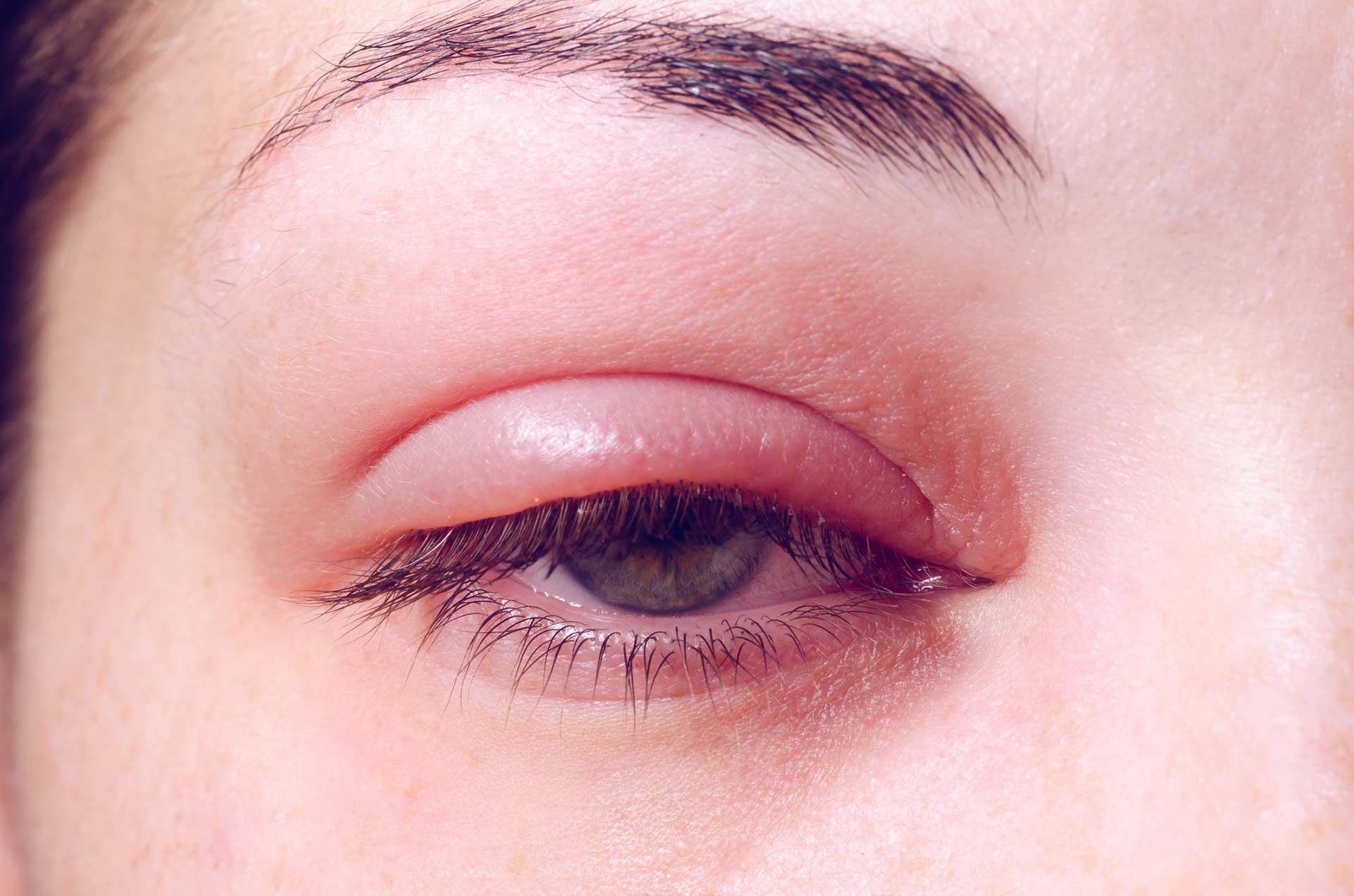
Blepharitis treatment

Blepharitis is a condition that affects the eyelid margins. It may also affect the tissues lining the lids and eyeball (the conjunctiva) and the window of the eye (the cornea). There are several different types of blepharitis, which may occur alone or in combination; these types involve either the lash bearing area (anterior blepharitis) or the area behind the lashes where the meibomian glands open (posterior blepharitis or meibomian gland dysfunction).

Blepharitis is an extremely common cause of dry eye in people over 40, although it can develop at any age and children suffer with it too. The symptoms of blepharitis can include:

  • Burning, soreness or grittiness in the eyes
  • Crusty eyelashes, sticky / watery eyes
  • Red / itchy eyelids

Blepharitis can be caused by a bacterial infection, or it can be a complication of a skin condition such as:

  • Seborrhoeic dermatitis, which causes an itchy rash on the skin and scalp (seborrhoeic dermatitis of the scalp is called dandruff)
  • Rosacea, which causes the face to appear red and blotchy
Blepharitis eyelid margin

Dry Eye Drops

There are many Dry Eye medications on the market, especially different forms of eye drops and ointments. Restasis is the only FDA approved eye drop for DED (dry eye disease) which has been proven to work in chronic inflammatory dry eyes.

There are many different products available over-the-counter, or on prescription only. Although most artificial tears contain similar ingredients, they differ in the type of lubricant used, in their chemical properties, and in the type (or lack thereof) of preservatives used. These are broadly classed under the following categories.

HMC-Based Artificial Tears

HMC-based artificial tears work on the simple principle of lubricating the ocular surface in order to promote the integrity of the surface, but do not have viscosity-increasing properties. Several brands of artificial tears:

  • Tears Naturale / Genteal (Alcon), contains hypromellose and a gentle preservative (polyquad in Tears Naturale).
  • Hypromellose (multiple pharma companies) contains hypromellose & generally the preservative is benzalkonium chloride, which can destabilise the tear film.
  • Artelac (Bausch & Lomb) 0.32% hypromellose.
  • Bion Tears (Alcon), contain hypromellose, dextran, zinc & bicarbonate and are only available on prescription. They are more beneficial in relieving dryness and irritation caused by Sjögren's.
  • Ilube (Moorfields Pharmaceuticals) contains 5% acetylcysteine & hypromellose, both these ingredients work together for DED due to abnormal mucus production.
  • Tear-Lac (Scope Ophthalmics) contains 0.3% hypromellose, preservative free.

CMC-Based Artificial Tears

Carboxymethylcellulose (CMC) is a polysaccharide known as mucilage. They increase the residence time of tears as well as increase the viscosity of tears. Commonly available CMC artificial tears include:

  • Optive / Celluvisc / Refresh (Allergan) - contain CMC & provide osmoprotection against high osmolarity of the tear film in DED.
  • TheraTears (Advanced Vision Research) eye drops and liquid gel contain carboxymethylcellulose and provide a tear-matched electrolyte balanced solution for dry eyes.

Propylene Glycol Based Artificial Tears

  • Systane / Systane Ultra (Alcon) contains polyethylene glycol & HP guar. The HP guar in this artificial tear brand is gel-forming and offers unique properties that improve recovery of the ocular surface due to possible increased retention of the artificial tear drop, and increase in tear film break up time.
  • Systane Balance (Alcon) may be helpful in patients with conditions causing evaporative dry eye (e.g., meibomian gland disease).
  • Blink Tears (Abbott Medical Optics) contains polyethylene glycol and hyaluronate with an "ocupure" preservative, and is clinically shown to improve tear film stability.

SH-Based Artificial Tears

Recent studies have shown that sodium hyaluronate eye drops are useful in improving subjective symptoms (as well as the ocular health) of dry eye patients, treating lipid tear-deficient patients and managing Sjögren's syndrome patients. Sodium hyaluronate also seems to have protective effects on the corneal epithelium and may be useful in a wide variety of patients with dry eye.

  • Hylo-Tears / Hylo-Forte (Scope Ophthalmics): preservative free 0.1% / 0.2% hyaluronate.
  • Artelac Rebalance (Bausch & Lomb) contains 0.15% hyaluronate, Vit B12, mineral nutrients & an innovative preservative Oxyd.
  • Clinitas Soothe (Altacor) 0.4% hyaluronate, preservative free.
  • Lubristil (Moorfields Pharmaceuticals) contains 0.15% hyaluronate, preservative free.

PVA-Based Artificial Tears

Polyvinyl alcohol lubricates the ocular surface.

  • Clinitas Ultra (Altacor) contains PVA & povidone with a mild preservative.
  • Murine Tears (Murine Eye Care) contains PVA, povidone & six of the 11 major ingredients found in natural tears.

Oil-Based Tears

Castor/soya bean oil aids in the reformation of the lipid layer of the tear film and prevents evaporation of the existing tear film. Oil-based eye drops are used in the treatment of meibomian gland disease.

  • Optive Plus (Allergan) contains castor oil.
  • Emustil (Moorfields Pharmaceutical) is made from 7% soybean oil and 3% natural phospholipids.

Anti-Inflammatory Drops

Restasis (Allergan) - This is the only FDA approved medication for Dry Eye Syndrome. Recommended dose is 1 drop twice a day. It's important to note that this medicine is not intended for instant relief, but rather a long-term medication that doesn't have the side effects of steroid-based eye drops.

Steroid-Based Drops

It's important to know that long-term use of steroid eye drops can cause a rise in eye pressure and development of a cataract. None of the eye drops listed below should be taken without the consent of your eye care professional. They are Alrex, Lotemax, FML and Vexol.

Dr Sabrina Shah-Desai

Meet the Expert: Dr Sabrina Shah-Desai

Dr Sabrina Shah-Desai is the founder and Medical Director of Perfect Eyes Clinic. With over two decades of surgical and non-surgical experience, she is considered one of the safest, most experienced oculoplastic surgeons in the UK.

Her extensive training, combined with her caring and empathetic nature, makes her a natural choice for patients seeking the very best care. Dr Sabrina appears consistently in Tatlermagazine as one of the UK's “Best Eye Surgeons” and “Top Doctors” since 2019.

Learn About Dr Sabrina
Royal College of Surgeons of England - register of Board-Certified Cosmetic SurgeonsBest Aesthetic Doctor - Safety in Beauty 2023Consultant Surgeon of the YearBest Surgical Result - Aesthetic Awards 2021Tatler Best Eye Surgeon 2019-2026
Patient Questions About Dry Eye Treatments

Frequently Asked Questions

The questions patients ask most often, answered by the clinic. If yours isn’t here, ask us directly - we would be delighted to help.

  • Underproduction called Aqueous Deficiency, where there is poor production of fluid by the lacrimal glands.

    Evaporative - tears evaporate too quickly, where there is poor oil production by the meibomian glands.

    Combination - mixed aqueous & evaporative type.

    However, ALL patients with dry eye can have an inflammatory component.
  • Persistently gritty, sore, foreign body sensation
    Red, itchy
    Misty or blurred vision
    Sharp shooting eye pain
    Watery eyes (paradoxical)

    Dry eye does not frequently cause blindness, but as it is such an uncomfortable condition, it is a common reason for seeking assistance. Furthermore, dry eye syndrome is associated with a decreased ability to perform activities that require visual attention, such as reading, computer work and driving a car.

    Patients with the most severe disease are at increased risk of developing corneal infection, scarring or ulceration. These conditions can cause permanent vision loss, misdirected eyelashes or loss of eyelashes and entropion (chronic blepharitis), so it is important to seek urgent professional help if you have severe symptoms of dry eye.
  • Severe dry eye is sometimes caused by Sjögren's syndrome, which is an uncommon autoimmune disorder that also results in dry mouth and often arthritis.
  • There are many tests that indicate you may be suffering with dry eye. Not all tests are always performed, but include:

    Tear Meniscus: the height of the tear film along the lower lid border (reduced in dry eye).

    Tear Break Up Time (TBUT): The speed at which tears break up reflects evaporation (<5 seconds indicates dry eye).

    Schirmer's Test: A test to measure quantity of tear production where strips of sterile blotting paper are placed at the outer corner of the eye for 5 minutes and the length of wetting is measured. However it is not a very reliable test, as it does not comment on tear quality.

    Tear Osmolarity: A test to measure the osmolarity of tears (high & variable in dry eye). This is an extremely reliable test, but does not help differentiate between the different types of dry eye.

    Blink: An assessment of whether the blink is partial or reduced.

    Ocular surface staining: With the help of topical drops, to evaluate the tear film and study ocular surface damage.

    Assessment of Meibum expressibility (meibomian gland secretions), which indicates function of the oil glands.

    Assessment of the Meibomian glands - with Meibography, to assess the drop out of meibomian glands.
  • Avoid anything that can aggravate dryness, such as:

    Very warm rooms (a humidifier may help)
    Hair driers
    Smoke
    Wind
    Contact lenses
  • HRT can aggravate dry eye. There is some evidence that, in older women, hormone replacement therapy makes dry eye worse; if you are using HRT, talk to your doctor about this.
  • Lubricating eye drops: First line of treatment is the use of artificial teardrops or gels, which can be bought over the counter. You may need to try out different types to see what combination relieves your symptoms of dry eye. Preservatives in eye drops can aggravate your eye, and if you are using them more than 4 times/day, non-preserved drops are recommended instead.

    Omega 3 supplements: Our modern diet is sadly lacking in sufficient quantities of Omega 3 and there is an overbalance of Omega 6, which contributes to inflammation. Omega 3 supplementation has been shown to be very useful for improving the function of Meibomian glands in blepharitis. It is important that the correct preparation is used, as not all Omega 3 preparations are biocompatible.

    Steroids: In more severe cases of dry eye, the eye might become inflamed and anti-inflammatory medications including steroid eye drops may be prescribed for short-term use.

    Restasis: This is an ophthalmic preparation of Cyclosporine, which is useful in decreasing inflammation and in Sjögren's syndrome.

    Punctal Occlusion: Temporary or permanent punctal occlusion may be an option offered by your ophthalmologist in severe cases. This involves blocking ducts within your eyelid. Used incorrectly, punctal occlusion can sometimes cause more problems, especially in inflammatory dry eye.

    Lid Hygiene - warm compresses and scrubs: The mainstay to treat anterior and posterior blepharitis. The meibomian glands in the eyelids get blocked and as a result lead to evaporative dry eye.

    EyeBag: An effective and simple option to provide warmth to the eyelids without the fuss of hot water. The EyeBag is placed in a microwave oven for 30 seconds, then placed on the closed eyelids for about 10 minutes, following which massage/scrubs can be performed.

    Blephasteam Goggles: An electrical pair of goggles that provides warmth and steam to treat MGD. Many patients prefer using this device, although it is a slightly more expensive option, as it offers moist heat.

    Lipiflow: A highly sophisticated treatment option that warms the lids and squeezes them to evacuate meibum within the oil glands. Excellent for kick-starting treatment in selected cases; regular lid hygiene is recommended to maintain the health and function of the glands.
  • Blepharitis cannot be cured, but symptoms can be controlled with good eye hygiene and lubricant eye drops. It is a chronic (long-term) condition, and most people experience repeated episodes followed by periods with no symptoms.

    Eye hygiene for Anterior Blepharitis: It is important to clean your eyelids every day, whether or not you have any symptoms.
    1. Apply a warm compress (a cloth or tissue dipped in warm water) to your closed eyelids for five to ten minutes. Gently rub the compress over your closed eyelids for two to three minutes to help loosen any crusting.
    2. Use a cotton bud moistened with boiled, cooled water and gently rub the edge of your eyelids to clean them. If you have difficulty using a bud, use proprietary cleaning pads such as Supranettes wipes by Alcon, Lid Care pads by CIBA, Blephaclean/Blephasol wipes by Spectrum Thea, or Ocusoft/Ocusoft plus eye pads by Scope Ophthalmics.
    Carry out these steps twice a day at first, then once a day when your symptoms have improved.

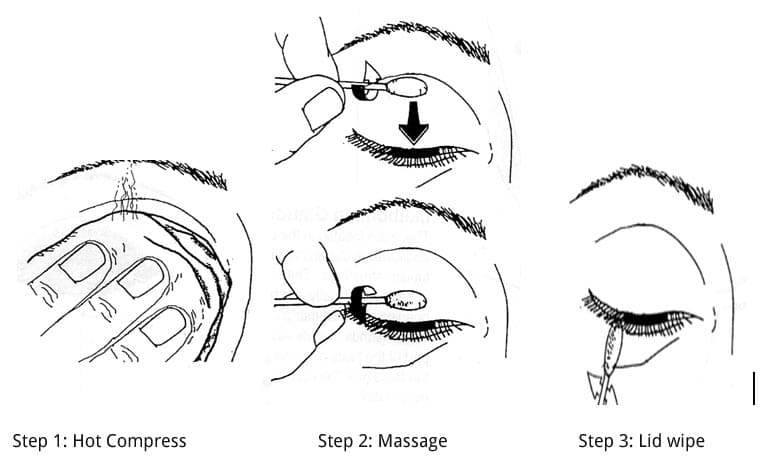
    Eye hygiene for Posterior Blepharitis: It is important to perform hot compress and eyelid margin massage every day.

    Step 1 - Hot Compress: Either heat the lids with a flannel soaked in hot water, or use a heat pad such as the "EyeBag". Apply to closed eyes for 4-5 minutes. Reheat as necessary.

    Step 2 - Massage: Express the oily secretions from the meibomian glands using a cotton bud or your finger. Firm pressure is required to milk the secretions towards the gland opening on the lid margin. Use a rotary motion down (or up) towards the lid margin, working across the whole upper and lower lid. Do not stretch the lid.

    Step 3 - Add Lid Scrubs or Wipes: Gently rub the edge of your eyelids with lid wipes to clean them, if you have mixed anterior and posterior blepharitis.

    Topical Antibiotics: If your blepharitis does not respond to regular cleaning, you may be prescribed a course of antibiotic ointments or steroids for four to six weeks, such as fucithalmic or maxitrol steroid/antibiotic eye ointment, or 1% azithromycin eye drops.

    Oral Antibiotics: In some circumstances, oral antibiotics (e.g. Azithromycin) may be prescribed at the start of treatment, particularly when a skin condition such as rosacea is aggravating your blepharitis, or if it does not respond to other treatment. It is important to finish the course, even if your symptoms improve.

    Treating Other Conditions: You may need to use an anti-dandruff shampoo on your scalp and eyebrows if you have seborrhoeic dermatitis or dandruff. If you have dry eye syndrome, which frequently occurs alongside blepharitis, you may need separate treatment for this, such as lubricant eye drops.
  • Dry eye syndrome
    Conjunctivitis
    Meibomian cyst
    Styes

Call or email us today, we would be delighted to answer your questions.

Ask a Question or Book an Appointment
Patient stories

Rated five stars by patients across the globe

4.8out of 5 from 240+ Google reviews

Desi StevensRated 5 out of 5 on Google
Simply the best dermatologist for skin care and eye surgery. She is a safe and skilled doctor who is highly experienced and will meet your needs, her approach is a soft and natural aesthetic. She listens and communicates clearly, professionally and in a kind and personable manner. I have been looked after by Dr Sabrina for many years have always been extremely happy with her advice, procedures and results. Highly recommend, she is a talented Dr you can trust.
Kealey HesseyRated 5 out of 5 on Google
Dr Sabrina is the magic eye fairy. Only 10 days after my lower lid bleph and midface lift and nearly all bruising and swelling has gone. After a lot of research, I knew after my initial consultation with Dr Sabrina she was the one I trusted. Such a warm & kind woman. I am so pleased I put my Trust in Dr Shah. Immensely happy with the results and will be back to get my upper eyes done in the future. Thank you to the whole team.
Jo KirbyRated 5 out of 5 on Google
I had been recommended Dr Sabrina by a medical colleague & am extremely glad I made the journey from Southampton to the Perfect Eye Clinic in London to discuss blepharoplasty. The team were all so friendly & very professional and most importantly, Dr Sabrina informed me that I had a bilateral eye ptosis. This explained a number of issues I was experiencing. I will definitely be booking to have a correction of bilateral eye ptosis and upper blepharoplasty. Can't recommend enough.
Shirley FordRated 5 out of 5 on Google
I am so very happy with my experiences at Perfect Eyes. Dr Sabrina is an absolute Star. Extremely talented, very personable I just couldn't be happier with my results and her overall professionalism. But a big part of my review is how lovely the support staff are too. Namely Safiya and Lisa who greet you with such warmness and respect. I highly recommend this clinic as I have done so with many friends.
Radhika RajanRated 5 out of 5 on Google
Top notch surgeon. Dr.Sabrina Shah is the best. Very meticulous and focused. Very experienced and very skillful. Supported by a great team, Irvana at the office is efficient and directs empathy as well towards nervous patients like myself . All in all a great experience.
Tina StonelyRated 5 out of 5 on Google
Dr Sabrina is so so kind and thorough in really assessing and understanding my needs and explaining in detail what works and the pros on cons of each treatment. I trust her implicitly and know she is the best physician in the UK and trainer to physicians for all aesthetic treatments. I cannot recommend her enough. You will not be disappointed choosing Sabrina.
Tanya Del FedericoRated 5 out of 5 on Google
Perfect Eyes provides an exceptional experience from start to finish. The team is warm, professional and highly knowledgeable, and every aspect of the consultation feels thorough and personalised. Sabrina combines outstanding surgical expertise with a genuine commitment to achieving natural, elegant results, taking the time to explain every option and ensure patients feel completely at ease. The care, attention to detail and standard of service are second to none. I would highly recommend Perfect Eyes to anyone looking for expert oculoplastic and aesthetic care.
Minda WangRated 5 out of 5 on Google
I am so happy with my experience. The results look natural, and I feel like a fresher version of myself since having my Biostimulation treatment with Doctor Sabrina. The whole experience was comfortable and professional, and I felt supported and well cared for throughout. I would definitely recommend this treatment to anyone looking for a natural-looking boost.
Samantha AndrewsRated 5 out of 5 on Google
Amazing. I’m so happy with the results. Sabrina is a master. She also has a wonderful bedside manner. I can’t recommend Sabrina and her team enough. Worth double the money. 👏🏻
Hayley PearsonRated 5 out of 5 on Google
I was lucky enough to first meet Sabrina 9 years ago & have never used anyone else since. She has helped transform my appearance; with natural looking aesthetics. I currently live abroad, however remain dedicated to stay a patient of Sabrina. What’s 3,500 miles when you have found the best in the business!

Book Your Consultation Today

Get personalised advice and expert care from our top medical professionals at 121 Harley Street, London.

Visit us
121 Harley Street, London
Mon to Fri9:30am to 6:00pm
Sat & SunClosed
Contact us

Contact our clinic

Speak to our team about which treatment suits you, or arrange a private consultation at 121 Harley Street.

Call or message020 7183 5121
Opening hoursMon to Fri9:30am to 6:00pmSat & SunClosed
Our locationPerfect Eyes Clinic, 121 Harley Street, London, W1G 6AXGet directions

Request a call back