

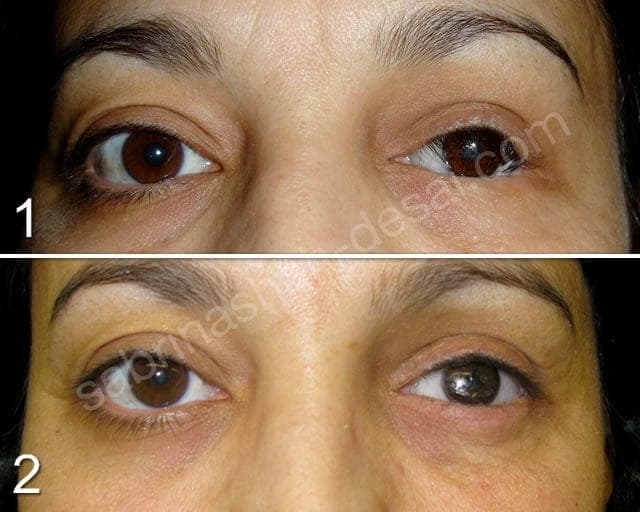









Procedure of Removal of an Eye and Insertion of an Orbital Implant
The procedure is performed in an operating theatre as day surgery under general anaesthetic, and takes approximately 60-90 minutes. The contents or entire eyeball is removed, an appropriately sized orbital implant is placed in the eye socket, and tissues are closed over it.
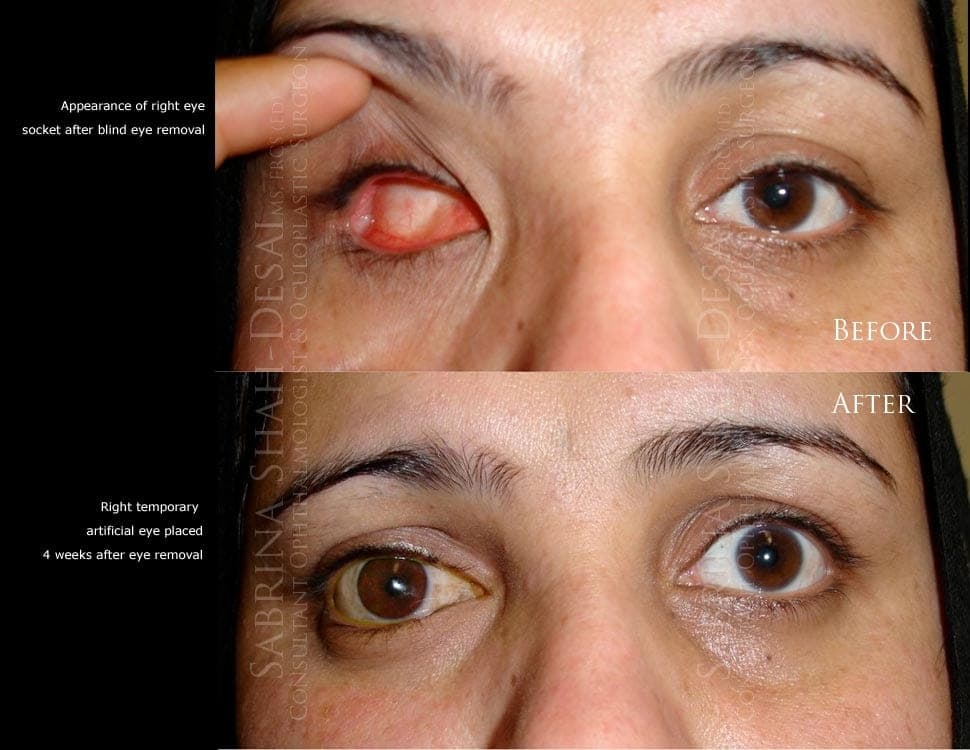
A temporary clear plastic shell (conformer) is fitted on top of the implant for a month after surgery to prevent the socket shrinking and give some shape while the socket heals. The eye is padded shut for the first 48 hours, and on removal, when you open your lids, you will see the moist pink lining of the socket (like the inside of your mouth). The conformer will look like a clear plastic shell with a hole in the centre, which allows for instillation of eyedrops. This conformer will stay in place until you are fitted with an artificial eye in 4-6 weeks. During this period, the pink colour of the lining will change to white.
The ocular prosthetist will create a detailed artificial eye to match your natural eye; this process can take up to a few days or weeks to perfect.
What Are the Risks of Orbital Implants and Wearing an Artificial Eye?
After enucleation or evisceration, there is a tendency for the lining of the eye socket (conjunctiva) to shrink over time. This can be controlled or reduced to a significant extent by wearing an artificial eye constantly. In addition, the tissues of the eye socket can undergo shrinkage, causing the upper and lower lid sulcus/fold to look deep and hollow (called post-enucleation socket syndrome).
Although wearing a larger prosthesis can reduce this appearance, the associated increase in weight can cause the lower lid to sag (ectropion). This can also present as instability of the prosthesis (falls out easily) or drooping of the eyelid (ptosis). As a result, a few patients ask for additional surgery to improve the aesthetic appearance, either by correcting the ptosis, tightening the lower lid, or improving the volume (removal of the old implant and insertion of a larger implant, placement of an orbital floor implant, or injection of fillers). Your surgeon will discuss the best options for you.
The artificial eye or prosthesis has certain inherent issues related to movement, never achieving the full range of movement of a normal eye. Range of movement can be improved by pegging, or by reducing the size of the artificial eye at the inner and outer corners.
Some patients develop an allergic response to the artificial eye, causing chronic discharge, which can be avoided by annual ultrasonic cleaning of the prosthesis.
After insertion of an orbital implant, there is a low risk of extrusion, migration or infection of the implant. Pegging of the implant can occasionally result in infection and extrusion of the implant, and a clicking noise when the eye moves.